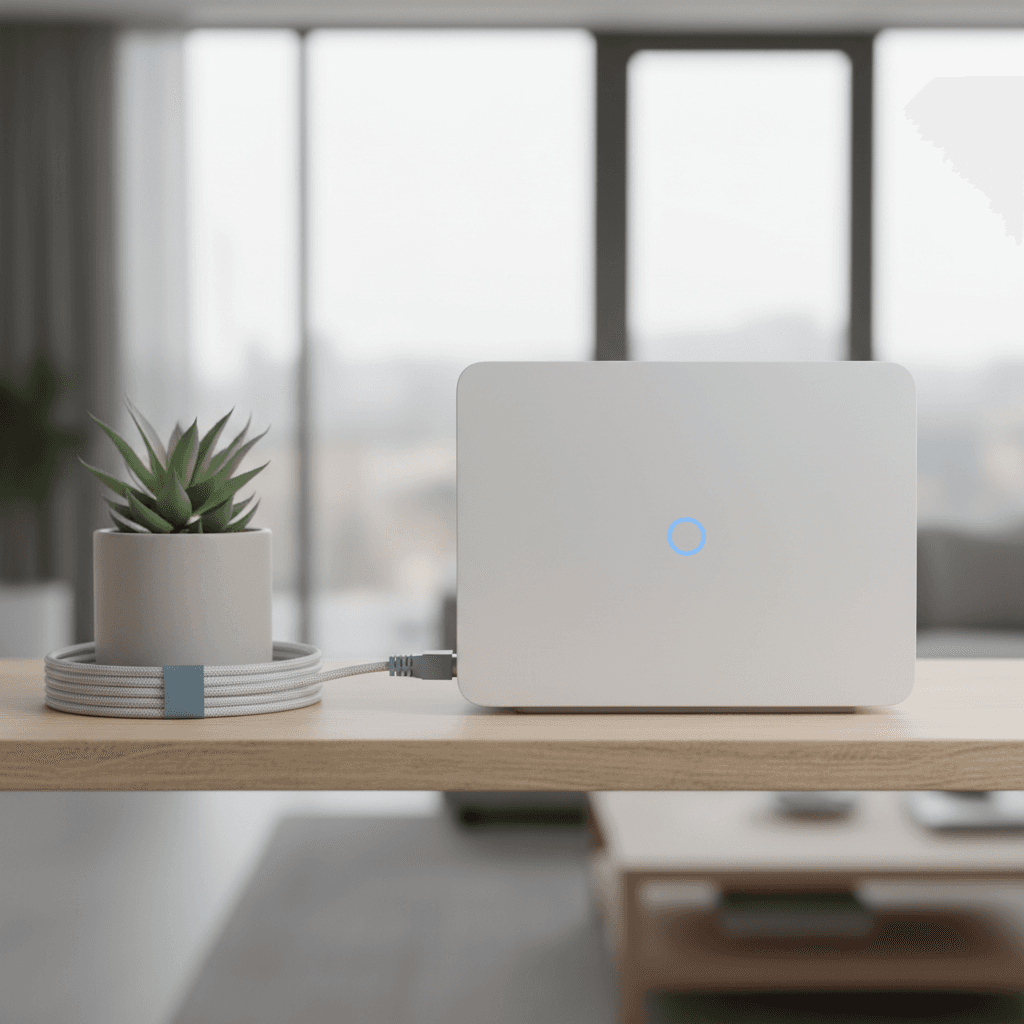
Verification status: This article is based on publicly available information (no hands-on testing or live trading by the editorial team).
When Sato Shota (pseudonym, 28, sales role) started living alone after an April job transfer, he hit a problem on his first night in the new rental: the apartment had no fiber-optic wiring, and the property manager said installation wasn't possible. He tried getting by with smartphone tethering, but videos kept buffering and stalling, and it disrupted his work on PC documents. With business trips several times a month, he was only home a limited number of days—yet not being able to use the internet during that precious time was a huge source of stress.
Bottom line: Gigaset WiFi (prepaid/charge-based) is a pocket WiFi that requires no installation, and it's best suited to short-term users and frequent travelers. Since it's charge-based, you can easily align costs with your actual usage, and you can verify contract terms and device delivery conditions upfront—so it's worth starting with the application and fee check.
The "Contract Commitment" That Trips Up People Who Want Internet Without Installation Work
Pocket WiFi that requires no installation work is an option for people living in properties where fixed-line installation isn't possible, allowing them to use the internet while keeping contract commitments in check. Here, we'll break down the contract commitments that tend to trip people up at first, using Sato Shota's case as an example.
Sato's first consideration was getting fiber optic internet installed. However, in a rental property, permission from the property management company is required, and if they say installation isn't possible, there's no way to move forward. Even if installation were possible, each move would come with installation and removal fees. For someone living alone who gets transferred frequently, a fixed-line connection was simply too heavy a commitment.
That's when pocket WiFi — which requires no installation work — came into the picture. With pocket WiFi, you just carry around a compact router, and you can connect to the internet both at home and on the go. There's no need to arrange installation, and its key appeal is that you can start using it the very day it arrives. Unlike fixed-line connections, it isn't tied to a specific residence, and many services offer relatively flexible contract terms, making it a practical option for people who move frequently or need short-term use.
That said, the thing to watch out for when choosing pocket WiFi is the "contract commitment." With flat monthly fee plans, contract periods of two or three years are common, and canceling early can trigger a cancellation fee. For someone like Sato, who travels frequently for work and spends limited days at home, paying fixed costs even during months when the service goes unused is something he'd want to avoid. To address these concerns, the next chapter takes a closer look at the pricing structure of Gigaset WiFi (top-up type) plans.
Gigaset WiFi (Prepaid/Charge Type) Basic Information | Pricing Structure, Data Allowance, and How Speed Throttling Works
Gigaset WiFi (Prepaid/Charge Type) is a pocket WiFi device that uses a prepaid charging-style pricing model. Understanding how the pricing structure and speed throttling work will make it easier to determine whether it fits your usage needs.
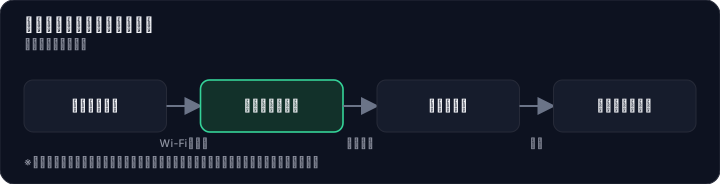

The prepaid/charge model means you purchase data allowance and usage periods in advance, then use the service as needed. Unlike a fixed monthly subscription where you pay the same amount every month, this model makes it easy to adjust your costs based on actual usage. For example, in months when you travel frequently and use the device sparingly at home, you can keep your data allowance low; in months when you're working remotely and need more, you can top up with a larger data package.
The official website lists the available data allowances and pricing plans. Before signing up, the key things to check are the expiration period for purchased data, how to add more data, and the conditions for speed throttling. In particular, even when a plan is labeled "unlimited," speed throttling or usage restrictions may still apply to ensure fair network usage across all users. Don't rely solely on the word "unlimited" — make sure to read the fine print.
Also, the speed of a pocket WiFi device can vary significantly depending on your location and the time of day. Building structure, surrounding signal conditions, and the number of connected devices all play a role, so it's a good idea to check real-world reviews on the official site or user review platforms before committing. If you plan to stream video or join online meetings from home, be sure to estimate in advance how much data your typical usage patterns will require.
The Gigaset WiFi (Prepaid/Charge Type) pricing model is close to a pay-for-what-you-use approach, making it a good fit for people who want to keep fixed costs down. Before signing up, always check what happens when you exceed your purchased data allowance — including speed throttling and the cost of adding more data. For frequent travelers like Sato, the prepaid model is a good fit because you don't have to worry about paying for months when you don't use the device.
You can check the latest pricing plans and data allowances on the official website.
Check Contract Period, Cancellation Fees, and Device Delivery Method | Tips to Reduce Lock-ins and Hassle
You can check the contract period, cancellation fees, and device delivery method for Gigaset WiFi (prepaid) on the official website before applying. Thanks to its prepaid nature, the service is easy to use even for short-term plans.
When choosing a pocket WiFi, it's important to check not just the price but also the cancellation terms. Monthly fixed-rate plans often come with a minimum contract period, and canceling early may incur a cancellation fee. Prepaid services, on the other hand, tend to have fewer contract lock-ins compared to monthly fixed-rate plans. However, some plans may require a separate device rental agreement or charge an initial fee, so be sure to review the terms before signing up.
Devices are typically shipped by mail, which means you can complete the entire process from home. Since there's no need to visit a store, even busy professionals can handle everything from application to delivery online. Once you receive the device, simply power it on and follow the included instructions to set up the WiFi and start using it.
If you're considering short-term use, it's essential to check whether there's a minimum contract period and under what conditions cancellation fees apply. Since Gigaset WiFi (prepaid) lets you pay only for the data you use, it's a cost-effective option for frequent travelers or anyone who needs temporary internet access. For someone like Sato, who has limited need for home internet, the fact that you don't have to worry about unused months is a major peace of mind.
Thorough Comparison with Other Options | Which Should You Choose If You Live Alone or Travel Frequently?
For people living alone or traveling frequently, the Gigaset WiFi (prepaid/charge-based plan) stands out for its flexibility in adjusting costs compared to other options. Let's check where it sits in the comparison table.

| Comparison Criteria | Gigaset WiFi (Charge-Based Plan) | Other Pocket WiFi Providers (WiMAX) | SIM Card + Mobile Router | Fixed Monthly Pocket WiFi |
|---|---|---|---|---|
| Pricing Structure | Pay-as-you-go (charge-based) | Mostly fixed monthly fees | Monthly fee + data tier | Mostly fixed monthly fees |
| Installation | Not required | Not required | Not required | Not required |
| Contract Commitment | Generally shorter | 2-year contracts common | No contract up to 1 year | 2-year contracts common |
| Device Setup | Rental or purchased separately | Rental or purchase | Bring your own | Rental or purchase |
| Best For | Short-term use, frequent travelers | Those who use it steadily every month | Those who want to save by bundling with their smartphone | Those who want high data volume without worrying |
From this table, it's clear that Gigaset WiFi (charge-based plan) stands apart from fixed monthly services due to its pay-as-you-go pricing structure. Since contract commitments tend to be shorter, it's well positioned for people whose data usage fluctuates month to month, or those who only need internet access for a short period.
Applying and checking pricing doesn't lock you into a contract—it's just a small step toward confirming your usage conditions and costs. You can start simply by comparing the terms on the official website. Since the application is free, and demo units plus no-deposit charge plans are available, you can test whether it suits your needs without any upfront costs.
Process from Application to Start of Use | Steps to Get Your Internet Environment Ready in the Shortest Time
GigaSet WiFi (prepaid type) is designed so that the entire process from application to start of use can be completed online. Here, we outline the general steps.
- Check the rate plans and data allowances on the official website
- Fill in the required information on the application form
- Receive the device at home
- Turn on the power and configure the WiFi settings following the included manual
- Start using the service within the limits of the purchased data allowance
For applications and rate inquiries,
Methodology and Disclosure
Verification method: This article is based on publicly available information confirmed as of 2026-08-22. The editorial team has not entered into or used the services reviewed. The content is based on public information (official pages, third-party reviews, and user feedback). Service details, fees, and promotions are subject to change, so please always check the official information before signing up.
Publisher information: The editorial policy and evaluation criteria for this article are set out in the Editorial Policy, and the verification procedures are described in the Evaluation Methodology. If you find any errors, please report them via our contact page.
Affiliate disclosure: This article contains affiliate links, and our site may earn a commission at no additional cost to readers. Compensation does not influence our assessments.
Frequently Asked Questions
Can GigaSet WiFi (prepaid) be used without installation?
Yes, no installation is required. Once the device arrives, simply turn it on and configure the WiFi settings. There is no need for construction or wiring like a fixed-line connection, so you can start using it immediately even in rental properties.
Is the data unlimited? Are there speed restrictions?
The official website may display 'unlimited,' but speed restrictions or usage limits may be applied to ensure fair usage. Don't rely solely on the word 'unlimited'; always check the terms and conditions.
What about contract periods and cancellation fees?
Since it's prepaid, there is generally less commitment compared to monthly fixed plans. However, there may be separate device rental contracts or initial costs, so check the cancellation terms on the official website before applying.
How do I receive the device?
The device is typically delivered by mail. You can complete the process from home without visiting a store. After receiving it, follow the included instructions to set it up and start using it immediately.
How do I pay for the prepaid plan?
With prepaid plans, you purchase data capacity or usage duration in advance. Payment methods can be checked on the official website, but credit cards and carrier billing are often accepted. You can top up as needed.
Can I cancel even for short-term use?
Due to the prepaid nature, there is less commitment, making it easier to cancel even for short-term use. However, cancellation fees or device return conditions may apply, so be sure to check before applying.
What internet speeds can I expect?
Speeds vary depending on location, time of day, building structure, and number of connected devices. Check the official website and user reviews to see if the speed meets your needs for video streaming or online meetings.
What should I check before applying?
Check the validity period of prepaid data, how to add more data, speed restriction conditions, cancellation fees, and device delivery method. Especially, even if 'unlimited' is stated, there may be speed restrictions, so read the terms carefully.
Related articles
2026 FXTF Account Opening Guide: How to Choose a Domestic FX Broker for Free
Considering opening an FXTF (Golden Way Japan) account in 2026? Compare spreads, trading tools, and support across three key areas. This guide explains how to open an account for free and evaluate the trading environment using the actual platform.
XM No Deposit Bonus 2026: Eligible Countries List
Check if your country is eligible for the XM $30 no deposit bonus in 2026. Updated list, terms, and step-by-step verification guide.
IwaiCosmo Securities Review 2026: Honest Look at Fees and IPO Lottery Odds, Plus Zero-Fee NISA
Get the latest 2026 review of IwaiCosmo Securities. We take an honest look at their strong IPO underwriting track record, zero trading fees for NISA accounts, overall fee structure, and customer support. Compare with major online brokerages.