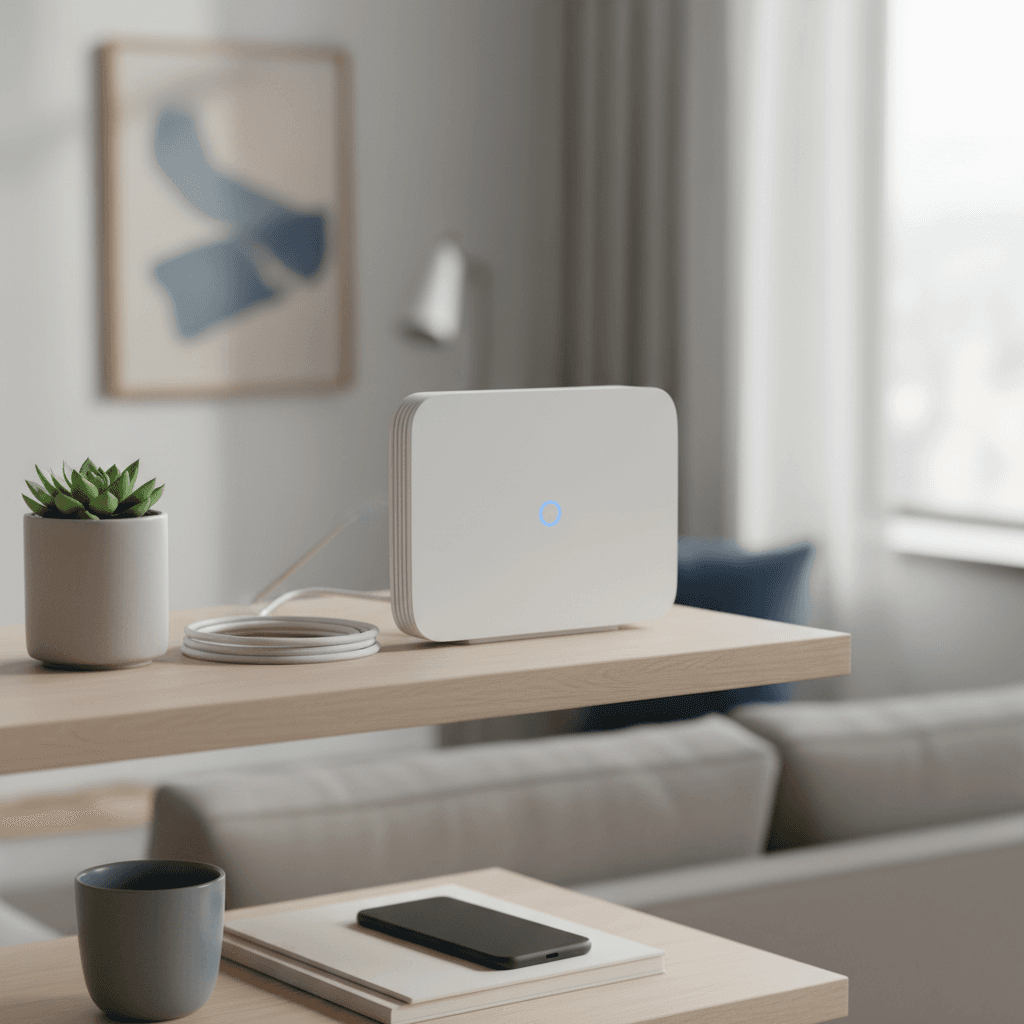
Verification Status: This article is an explanation based on publicly available information (no actual use or transactions by the editorial staff).
The moment Yuki (28, office worker) booked her flight to South Korea, the image that came to mind was herself standing in a long line at the WiFi rental counter at the airport, clutching a suitcase. The flight arrived at night, and it was her first trip to Seoul with a friend—just the two of them. Translation apps and online maps are just icons without a network connection. "Overseas roaming through my carrier is expensive, and can I really get by with just free local WiFi?" That anxiety cast a subtle shadow over her excitement for the trip.
Conclusion: If you want stable internet for multiple devices on a trip to South Korea, an overseas rental WiFi service designed specifically for Korea, such as "Korea Data," is the right choice when you're unsure. It's a simple setup—rent it domestically and use it in Korea—and everything from application to coverage area confirmation is completed before you depart.
The Fear of Long Airport Lines and "No Connection" — Yuki's Anxiety
The flight to Seoul is on Friday night. Since she'll rush there after work, her time at the airport will be tight. What weighed most on Yuki's mind was the hassle of securing a means of communication in the arrival lobby. Her travel companion was optimistic, saying, "Isn't the local free WiFi good enough?" But Yuki couldn't bring herself to agree, remembering a post she'd seen on social media: "The free WiFi was unstable, maps wouldn't open, and I ended up wandering around looking for a café."
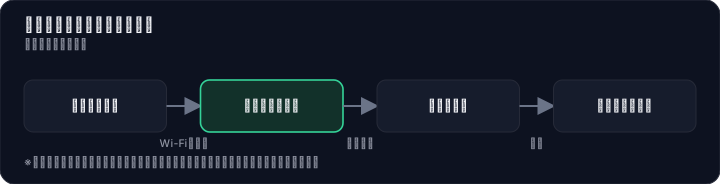
She also looked into overseas roaming from domestic carriers. True, the setup seemed simple. But for someone who regularly uses videos and social media, plans costing several thousand yen to over 10,000 yen for just a few days would put a strain on the total travel budget when combined with airfare and hotel costs. She hesitated to allocate that much money solely for communication expenses while traveling.
What matters in travel preparation isn't just your passport and hotel reservations. Whether you lock down your "connectivity" in advance greatly changes your freedom of movement and peace of mind on the ground. Being able to skip the airport lines and launch your navigation app immediately upon arrival—that was one of the smart preparations needed to make the most of limited travel days.
What Makes "Korea Data" Different? — Unpacking the Service
When he was stuck with that nagging worry, Yuki heard from a friend that "there's apparently a WiFi rental made exclusively for Korea," and learned about a service called "Korea Data." Looking across multiple review sites and travel blogs, it becomes clear that this service is, as the name suggests, a rental WiFi designed specifically for Korea.

The first thing that stands out is the ease of pickup and return. You receive the device at a dedicated airport counter or via home delivery, and when you return, you simply drop it in the included envelope at a postbox or hand it back at the airport counter. Since most of the paperwork is completed on the official Japanese website before your trip, the "long lines after arriving overseas" that Yuki worried about are a non-issue.
Multiple user reports indicate that the coverage area spans all of South Korea. It's reassuring not only in major cities like Seoul and Busan, but also when venturing out to regional cities. The pricing structure is mostly a per-day system based on the number of travel days, making it a good fit for short trips. Based on publicly available information, the exact rates tend to follow a "variable plan" model that changes depending on the number of days and pickup location. For an accurate price tailored to your itinerary, you can get an instant quote by entering your dates and location on the official website.
Yuki appreciated that this service focuses exclusively on "Korea only." Rather than trying to do everything, having something that works reliably in a single country seemed far more important for a first-time trip to Korea.
So Which One Is Actually the Best Deal? An Honest Comparison of WiFi, eSIM, and Roaming
As Yuki gathered more information, he found himself even more confused. The options weren't limited to rental WiFi—there were also eSIMs, carrier international roaming, and other methods, each touted as "recommended."
Let's line up these main options on the same axis and organize their features. The comparison below is based on publicly available information from each service and reports from multiple travel blogs, focusing on "what actually changes" for travelers.
| Comparison Axis | Korea-Specific Rental WiFi (e.g., Korea Data) | Domestic Carrier International Roaming | Travel eSIM | Local Prepaid SIM |
|---|---|---|---|---|
| Pricing Trends | Mostly flat-rate plans from a few hundred yen per day. Can be split among multiple people | Tends to be expensive, from a few hundred to several thousand yen per day | Pay-as-you-go or flat plans from a few hundred yen. Price varies by data allowance | Relatively cheap, but purchasing in Japanese can be a hurdle |
| Data Allowance | Many plans advertise "unlimited," so you can use data without worrying (Note 1) | Part of your regular domestic plan carried over, or purchased separately | Limited data such as up to 1GB or 3GB. Top-up options also available | Fixed data allowance; may not be suitable for video streaming |
| Simultaneous Connections | Multiple devices (e.g., 5–10) can connect—common. Good for group travel | Only your own smartphone. Tethering is the baseline | Generally one device (only the device with the profile installed) | Generally one device |
| Pickup & Setup | Pick up in advance at the airport or home. Connect immediately after powering on | No setup required, but expensive | Purchase online before travel & set up via QR code. Requires familiarity with device operation | Purchase at the local airport or convenience store. APN settings required on the device |
| Speed & Stability | Uses Korea's telecom network. Many reports of stable, high-speed connections | Feels the same as domestic, but reports of slowdowns depending on time and location | Uses local carrier networks. Speed tends to be stable | Uses local carrier networks. Speed tends to be stable |
| Support | Many services offer support in Japanese | Japanese support from domestic carriers | Varies by service. Some do not offer Japanese support | Generally in the local language or English |
Note 1: "Unlimited" plans often include a "fair use policy" that throttles speed if there is a large amount of data usage in a short period. Be sure to check the details before use.
Ultimately, who should choose which is the core of this comparison. Korea-specific rental WiFi shines most in cases like Yuki's: "traveling with two or more friends," "using both a smartphone and tablet," "not familiar with setup," and "simply don't want to worry about data limits while traveling." No monthly contracts or complicated setup—just rent it for the trip and return it. That simplicity is its biggest advantage.
On the other hand, for those who "travel solo and only use maps and social media," "carry just one smartphone," or "have no issue with device setup or online procedures," an eSIM or local SIM can be a cost-saving option. International roaming is for people who value "zero setup hassle" above all else—it's not something you choose for cost performance.
After weighing these options, the first step to avoiding regret is to figure out which type you are, then check coverage areas and get a quote on the official "Korea Data" website, which you can verify with low risk.
Real Trust and Caveats Emerging from Actual Reviews
Wanting to know the "on-site usability" that cannot be seen from specifications alone, Yuki read through reports from multiple travel experience blogs and review sites. Reports from 2026 onward show several common evaluations.
What stood out as positive feedback was the voice saying, "The connection is fast and stable." Reports can be confirmed across multiple blogs that from the moment you arrive at the airport and turn on the device, the map app launches without stress, and videos do not cut out even on the subway. There were also comments such as "the battery lasted a long time," with little worry about charging even when sightseeing from morning to night.
On the other hand, what was pointed out as a caveat was fluctuation in speed depending on the region and time of day. Among the reviews, there are reports of communication slowing down at concert venues with large crowds or in certain underground areas. This is something that can happen with any means of communication, stemming from the physical characteristics of radio waves. Regarding "unlimited" data communication as well, some blogs report experiences to the effect that "speed was throttled after exceeding a certain data volume." This is a restriction in accordance with the "fair use policy" that the service sets forth, and it is not a problem specific to any particular service. For details, checking the terms of use on the official website before signing up can eliminate anxiety before departure.
What these reviews reveal is a down-to-earth assessment that Korea data "provides stability that greatly exceeds expectations for everyday travel use," while "there are limits in exceptional congestion situations or extreme usage patterns." However, it was precisely this down-to-earth information that gave Yuki a sense of reassurance. Because compared to exaggerated advertising, the real voices of users were the most reliable material for trip preparation.
From Reservation to Return: A Simulation of Yuki's Experience
You understand the benefits. Now all that's left is to solidify the image of "can I really do this myself?" Let's simulate the entire process of Yuki renting "Korea Data" and returning it after the trip.
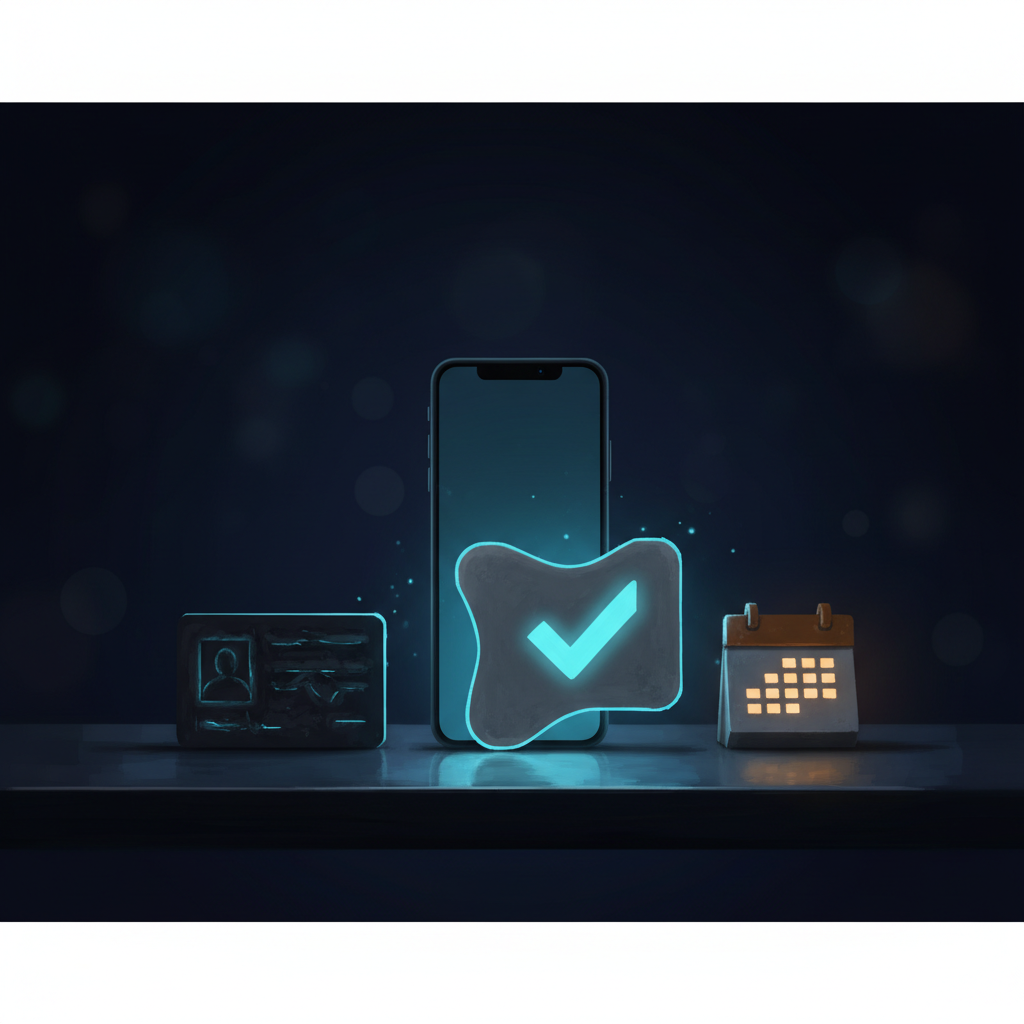
1. Before Departure: Apply in 3 Minutes on Your Smartphone by Selecting Your Departure Airport First, visit the official website and select your travel date, return date, and the airport where you want to pick up the device. All you need to provide is basic information such as your name, flight number, and contact details. It's an operation that takes just a few minutes, no different from booking a flight ticket, and the cost to be split with friends is confirmed at this stage. This is an important, easy-to-try first step before any charges are incurred.
2. Departure Day: Pick Up at the Airport Counter and Activate Immediately On the day of departure, stop by the designated counter in the international departures lobby. Simply provide your reservation number, and you'll receive a fully charged device along with a simple return kit. Just turning on the power is all it takes—the device is pre-configured so WiFi is ready to go as soon as you arrive in Korea. No complicated password entry is required.
3. During the Trip: Keep It in Your Pocket and Explore the City After arriving in Korea, turn on the device, and on your own smartphone, simply tap the usual WiFi icon. Yuki uses their own smartphone, friends use their tablets—multiple devices can be connected simultaneously, allowing everyone to walk around the city while sharing translation and map apps. If the battery gets low, just charge the device itself with a portable power bank you've brought along, and you'll be covered until nightfall.
4. On Return: Drop It in a Postbox with the Provided Envelope and You're Done On the final day in Seoul, before boarding the return flight or at the arrival airport in Japan, place the device in the return envelope and drop it into a postbox. To avoid any late fees, it's best to complete this step while you're still at the airport. That's all—every procedure is now finished. What remains in your hands are only the best photos you took during your trip.
After seeing this entire flow, Yuki's concerns were resolved. Complete the application and confirm the coverage area before departure, then simply pick up and return the device. This simplicity is what convinced Yuki that it's the key to fully enjoying a first trip to Korea.
Summary: Korean Data is Perfect for Travelers Like You
If you're planning a trip to South Korea and wondering, "How should I handle communications?" — in the end, Korean Data (Korea-only WiFi) is undoubtedly a reliable companion for the following types of travelers.
Who it suits
- Group travelers with friends or family: Even with a large group, you can share the cost of a single device, making the per-person burden overwhelmingly smaller.
- Those who want to use a tablet or PC in addition to their smartphone: Since multiple devices can be connected simultaneously, there's no need to prepare separate communication methods for each device.
- Those who want to avoid complicated setup at all costs: No initial configuration is required—just rent it, turn it on, and go. It truly shines for those unfamiliar with overseas communication settings.
- Those who want to enjoy videos and social media without worry: Large-capacity "unlimited" plans are available, so you don't have to worry about data usage after returning home.
Who it doesn't suit
- Solo travelers on ultra-short stays who want to keep communication to a minimum: Compared to eSIMs and other options, there may be room to consider a plan that better fits your usage.
- Those who are strict about not carrying a single extra device: With an eSIM, no physical device is needed at all, so if lightness is your top priority, it's an option worth considering.
Choosing your communication method greatly affects the quality of your trip. However, this decision is by no means a heavy one. That's because the "application and coverage area check" takes only a few minutes, and at that point, no costs are incurred yet. First, visit the official Korean Data website and check whether there's a plan that fits your itinerary and whether your destination is covered. Just like Yuki, that first step is the initial action that turns travel anxiety into peace of mind.
Please note that the communication speed and connectivity of the Korea-only WiFi introduced in this article may vary depending on local conditions such as the radio wave environment at your destination and congestion levels in the areas you visit, so the actual experience may differ depending on your usage environment. Additionally, plans labeled as "unlimited" data generally include speed throttling conditions to ensure fair service provision, so we recommend reviewing the official terms and conditions before signing up.
Methodology and Disclosure
Verification Method: This article was created based on publicly available information confirmed as of 2026-08-01. The editorial team has not actually contracted or used the services in question. This explanation is based on public information (official pages, third-party reviews, and user feedback). Since service details, pricing, and campaigns are subject to change, please be sure to check the official information before applying.
Operator Information: The editorial policy and evaluation criteria for this article are described in the Editorial Policy, and the verification procedures are described in the Evaluation Method. If you find any errors in the content, please report them to our contact desk.
Affiliate Disclosure: This article contains affiliate links, and our site may receive compensation at no additional cost to the reader. Compensation does not influence the evaluation content.
Frequently Asked Questions
Can Korea data be used outside of Korea?
Korea data is a rental WiFi service designed exclusively for Korea. It cannot be used in countries other than Korea. Because it is specialized for travel to Korea, it prioritizes communication quality within Korea and is not intended for use in other countries.
Is the data truly unlimited?
Many Korea data plans are labeled as "unlimited," but fair usage policies may apply. If you use a large amount of data in a short period, your speed may be throttled, so we recommend checking the official website for details before use.
How long does the device battery last? Can I use it while charging?
Korea data rental devices generally come with a battery that supports about one day of continuous use. By using a power bank alongside, you can also use the device while charging. For long outings, bringing a spare battery is recommended for peace of mind.
Are there pickup locations other than the airport?
In addition to pickup at dedicated airport counters, Korea data also supports home delivery to your residence or accommodation. Since you can select your pickup method in advance on the official website, you can receive the device without waiting in line at the airport.
Do I have to return the device on the last day of my stay?
The device can be returned at any time within the rental period. The common methods are returning it to the airport counter on your departure day or dropping it in a mailbox using the included envelope. You do not need to return it on the last day of your stay; as long as you return it within the rental period, there is no issue.
Can I cancel after applying?
Cancellation of Korea data is possible before the start of use. However, cancellation fees may apply, so please check the cancellation policy on the official website. If your travel plans change, it is important to contact them as soon as possible.
Are a passport or driver's license required?
Identification documents are required to rent Korea data. Specifically, ID such as a passport or driver's license is required. Since identity verification is conducted at the time of application, please prepare valid documents.
What should I do if the connection speed is slow?
If the connection speed is slow, first try restarting the device or moving to an area with a better signal. If the issue persists, contacting Korea data customer support will allow you to receive assistance with checking settings or getting alternative solutions.
References & Sources
This article is based on publicly available information as of 2026-08-01.
- Korea Data Reviews & Ratings (7 entries) | Minhyo
- My Experience Renting WiFi for an Actual Korea Trip with Korea Data | mana korea blog
- What Are the Reviews and Ratings for Korea Data? Unlimited WiFi at a Bargain Price
- Korea Data Pricing, Summer Campaign Discounts, and How to Use It | Overseas WiFi Comparison Navi
- What About "Korea Data"? Plan Breakdown and Real Reviews & Ratings
- Comparison of 6 Overseas WiFi Rental Services for Korea | Overseas Mobile Rental Roundup
- Korea WiFi Rental with iVideo | Unlimited 5G at Industry-Leading Low Prices! Airport & Lawson Pickup Available
- Recommended for Korea Travel! Announcing the Cheapest Company After Thoroughly Comparing Overseas Rental WiFi | FAN+IO | Pocket WiFi & WiMAX Comparison
- Which WiFi Rental Is Best for Korea Travel? From Necessity to Local WiFi Conditions!
- A Thorough Verification of Korea Data WiFi Reviews! A Realistic Look at Korea-Exclusive Rental WiFi Pricing, Speeds, and Drawbacks - Deep Review
- Is Budget Overseas WiFi "Korea Data" Worth It? Reviews & Ratings Summary | World News @ Overseas WiFi Rental Reviews & Ratings
- What Are the Real Reviews of Korea DATA? Easy to Use for Only 590 Yen!? | Overseas WiFi Rental Shop
Related articles
Takeru FX School Review (2026)
For FX beginners and intermediates in Japan; face-to-face and online lessons, demo trading, and a structured curriculum. Confirm fees and refund terms before enrolling.
Japan FX Education Institute FX School Info Session Review (2026)
For beginners in Japan who are about to start FX: what the Japan FX Education Institute's school info session covers, who it suits, and what to confirm about fees and terms before applying.
XM No Deposit Bonus 2026: Eligible Countries List
Check if your country is eligible for the XM $30 no deposit bonus in 2026. Updated list, terms, and step-by-step verification guide.