Conclusion
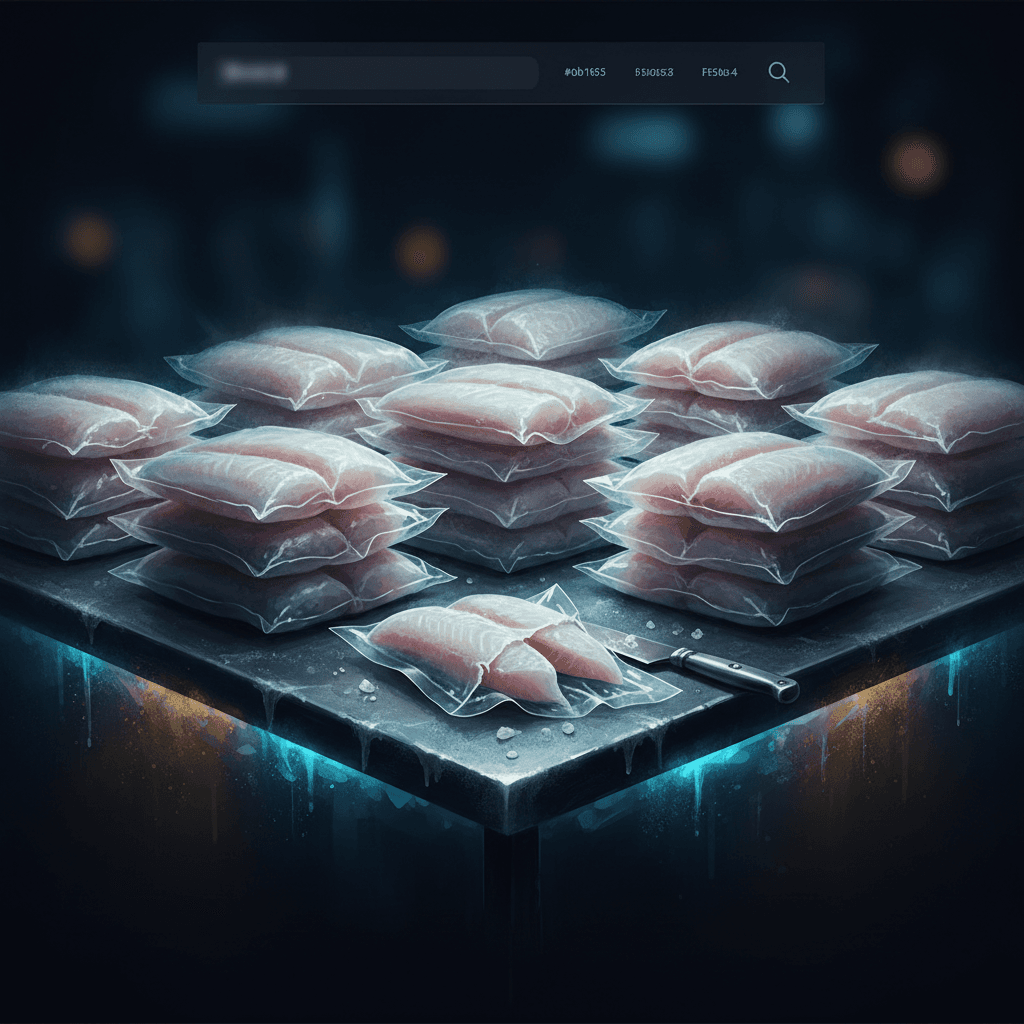
"Frozen boneless fish" products are a category of foods designed for easy eating and time-saving preparation, with small bones removed through a combination of manual processing and machine inspection. When selecting a product, focus on these four key points: "bone removal method (manual processing plus X-ray inspection)," "presence or absence of added salt," "fish species and country of origin," and "whether individually packaged." Since types vary by fish variety, seasoning options, and package size, choosing based on your usual cooking scenarios will help you incorporate these products into your meals efficiently and without waste.
Why Boneless Frozen Fish Products Are Gaining Attention Now
Boneless frozen fish products are garnering support primarily due to the convergence of three key factors.
First is the growing demand for time-saving meal preparation. While fish is known to be healthy, the labor-intensive processes of cleaning and deboning have often deterred consumers. Boneless fish significantly lowers this barrier; its convenience—requiring only thawing before grilling or simmering—has made it popular among busy households and individuals living alone.
Second is the advancement in processing technology. Currently, mainstream boneless fish undergoes manual deboning by skilled workers, followed by verification using X-ray inspection systems before shipment. This has drastically reduced the risk of remaining bones, leading to wider recognition as a safe food option even for households with young children or elderly members.
Third is the improvement in freezing technology and logistics. Because fish are processed and frozen immediately after catch while still at peak freshness, it has become easier to recreate the taste of the season at home. Even when sourced from overseas production or processing locations, robust systems ensure imports under strict temperature control, allowing products to reach store shelves while maintaining high quality.
How to Read Specifications and Product Details
Packaging and product descriptions for deboned fish often contain easily overlooked information. Understanding what each term means can help prevent mismatches between your expectations and the actual product.
Difference Between "Deboned" (骨取り) and "Boneless" (骨なし)
Although they may seem similar, these terms have distinct meanings. "Deboned" refers to fish that originally contained bones which were physically removed. On the other hand, "boneless" describes fish that have been filleted into three sections before having the bones taken out. While both result in a bone-free product, it is important to understand that neither involves selective breeding to eliminate bones; rather, the bones are removed during the processing stage.
Country of Origin vs. Place of Processing
Packaging may list the "Country of Origin" and "Place of Processing" separately. For example, if fish caught in Alaska are deboned at a factory in Vietnam, the label will read "Origin: Alaska" and "Manufactured in: Vietnam." The fact that processing occurs outside Japan does not imply safety issues; these facilities comply with Japanese import standards. If you have concerns, we recommend checking not only the place of processing but also the hygiene management information published by the manufacturer for added peace of mind.
Salt Content (Salted vs. Unsalted)
Frozen deboned fish comes in both salted and unsalted varieties. Products labeled as "Salted Mackerel" or "Salted Salmon" contain added salt and are ideal for grilling and eating as-is. Conversely, items marked "Unsalted" contain no added salt, making them suitable for dishes where you want to control the seasoning, such as simmered in miso or prepared as meunière. Choose unsalted if you want culinary flexibility, or opt for salted versions if you prefer convenience.
Individual Wrapping vs. Block Packaging
Frozen deboned fish is available in two main packaging types: "individually wrapped," where each fillet is sealed separately, and "block packaging," where multiple fillets are packed together in a single bag. Individually wrapped portions offer hygienic benefits, allowing you to take out only what you need while reducing the risk of freezer burn. Block packaging tends to be more cost-effective; however, once thawed, refreezing is difficult, so you should plan to use the entire block at once.
Key Checkpoints for the Deboning Process
Check the packaging for labels such as "X-ray Inspected" or "Visually Confirmed." These indicators serve as useful criteria when making a selection. Products that combine manual inspection with mechanical testing are more likely to have undergone rigorous bone removal. This is particularly important when serving young children, making these process labels a valuable factor in your decision-making.
Selection Criteria
When choosing frozen boneless fish products, narrowing down your options based on the following five key factors will help you find items that best suit your lifestyle.
1. Choose by Fish Type
The first step is to decide on the type of fish you want to eat. Here are the representative fish varieties and their characteristics:
- Mackerel (Saba): Rich in fat with a satisfying texture. Ideal for grilling as salted mackerel or simmering in miso. This is the fish variety with particularly high demand for boneless processing.
- Salmon (Sake/Salmon): Mild flavor with broad appeal across all age groups, from children to seniors. Available in both salted and unsalted versions, offering a wide range of culinary possibilities.
- Red Sea Bream (Akadai): Features plump, tender flesh that delivers an authentic Japanese flavor when simmered. Many products can be cooked directly from frozen.
- Spanish Mackerel (Sawara): Offers a light, refined taste. Popular for Saikoyaki (miso-glazed) and Teriyaki preparations. Buying in large-capacity packs helps keep costs down.
- Yellowtail (Buri) & Flounder (Karei): Slightly higher in price but perfect for adding variety to your menu. These make excellent main dishes when prepared as simmered fish or Teriyaki.
2. Choose by Balance of Volume and Price
Since boneless fish is often used for daily meals, finding a price point that is sustainable for regular use is crucial.
- Small Packs (2–3 fillets): Ideal for those wanting to try a product first or for households with limited freezer space. In supermarkets, a standard benchmark is around ¥400–¥500 for two cuts of boneless mackerel.
- Large Capacity Packs (1kg or more): Suited for households that frequently prepare fish dishes. While the unit price per fillet drops, making it economical in the long run, a direct price comparison can sometimes make large packs appear more expensive. For instance, comparing an online unsalted boneless mackerel product (approx. ¥7,000 for 1kg) against small supermarket packs requires evaluating not just price, but also taste, quality, and ease of use.
- Hometown Tax Donation Return Gifts: Domestic boneless salmon is often available as a return gift. For example, donation amounts vary by content weight for unsalted boneless salmon fillets, with benchmarks around ¥11,000 for 1kg and ¥20,000 for 3kg. When considering the actual out-of-pocket cost after tax deductions, this becomes a viable option.
3. Choose by Seasoning and Preparation
Select the seasoning type based on your desired flavor profile and how much preparation time you wish to save.
- Unsalted/Plain: Contains no pre-added seasoning, allowing for versatile arrangements such as miso-simmered dishes, boiled fish, meunière, or fried fillets.
- Salted: Includes products like salted mackerel and salted salmon. The appeal lies in the convenience of having a complete dish ready just by grilling.
- Miso-Marinated, Saikoyaki, or Sake Lees-Marinated: Pre-seasoned so that grilling instantly completes the main dish. Highly convenient for easily expanding Japanese-style menu options.
- Sake-Marinated or Kelp-Cured: Some manufacturers offer products prepared using traditional Japanese methods. These are characterized by reduced fishy odors and enhanced natural umami.
4. Choose by Usage and Lifestyle
Key priorities shift depending on who is eating and in what context.
- Households with Children: Prioritize products that have undergone X-ray inspection to minimize the risk of remaining bones. Choosing unsalted types with lower sodium content allows you to adjust seasoning at home for added peace of mind.
- Single-Person Households & Busy Individuals: Individually wrapped types are highly convenient. Assortment packs containing small portions of multiple fish varieties help prevent menu monotony.
- Seniors & Care Meals: The absence of bones provides significant reassurance. Varieties with soft flesh, such as red sea bream and Spanish mackerel, are considered easier to eat.
5. Choose by Purchase Channel
- Physical Stores (Supermarkets & Business Supermarkets): Allows you to inspect the product visually and purchase in small quantities. Business supermarkets often offer large-capacity packs at relatively low prices.
- Online Retailers: Offers a rich variety of fish types, package sizes, and seasoning options. Subscription services are available to prevent running out of stock.
Comparison by Type
| Type | Main Fish Varieties | Recommended Capacity | Seasoning | Best For |
|---|---|---|---|---|
| Small Packs for Daily Use | Mackerel, Salmon, Red Sea Bream | 2–3 slices (150–300g) | Salted or Unsalted | First-time buyers, those with limited freezer space |
| Bulk Packs for Stocking Up | Mackerel, Spanish Mackerel | 1kg–4kg | Mostly unsalted | Households that cook fish frequently, cost-conscious buyers |
| Pre-Marinated & Ready-to-Cook Slices | Mackerel, Spanish Mackerel, Yellowtail | 2–4 slices | Miso-marinated, Saikyo-marinated, Sake-lees marinated | Those seeking minimal prep time, bento box preparation |
| Single-Species Specialty Packs | Red Sea Bream, Spanish Mackerel | Varies by manufacturer | Mix of unsalted and pre-marinated | Enthusiasts who want to savor specific fish varieties |
| Hometown Tax Donation Return Gifts | Salmon, Yellowtail | 1kg–3kg | Unsalted or Salted | Those looking to acquire domestic products while minimizing out-of-pocket costs |
How to Use and Tips for Best Results
If you are using frozen boneless fish for the first time, knowing the proper preparation steps and precautions in advance will help you achieve delicious results without failure.
Thawing Basics
The best way to maintain the quality of frozen boneless fish is to thaw it slowly in the refrigerator. If you move it from the freezer to the fridge the night before, it will be perfectly thawed by the time you are ready to cook the next day. If you are in a hurry, you can place the vacuum-sealed pack under running water, but take care to ensure that water does not come into direct contact with the flesh. Using the defrost function on a microwave can cause uneven heating and make the flesh tough, so it is safest to avoid this method unless you are pressed for time.
Cooking Tips
Boneless fish often has small holes in the flesh, meaning it tends to cook faster than standard fillets. When grilling, use medium heat and cook gently; when simmering, add the fish only after the broth has reached a boil and finish cooking quickly to prevent dryness. Some products are designed to be cooked directly from frozen; in such cases, adjust the heating time according to the package instructions.
Storage Precautions
If you cannot use the entire package after opening, wrap the remaining portion in plastic wrap, place it in a freezer-safe bag, and return it to the freezer. At this stage, removing as much air as possible and sealing it tightly will prevent flavor deterioration caused by freezer burn. Even if you purchase block-packaged products, dividing them into smaller portions before freezing will improve convenience for future use.
Example Use Cases
For a single office worker (male, 30s) Wanting a meal ready immediately after returning from work, he keeps individually packaged "boneless salted mackerel" stocked in his freezer. By moving it to the refrigerator in the morning, the main dish is complete simply by pan-frying it upon returning home. On weekends, he prepares "boneless unsalted mackerel" as miso-ni (simmered in miso), making extra to use in the next day's bento box. He primarily uses online subscription services for grocery shopping to prevent running out of stock. (Hypothetical example)
For a family with children aged 4 and 7 To ensure the children can eat fish without worrying about small bones, they keep "X-ray inspected" boneless red sea bream and boneless mackerel permanently stocked in the freezer. The red sea bream is added frozen directly to the pot for simmered dishes, while the unsalted mackerel is purchased and prepared as a sweeter miso-ni to suit the children's tastes. By buying large-capacity packs and portioning them for freezer storage, they reduce the cost per fillet while remaining prepared for sudden cravings for fish. (Hypothetical example)
For a foreign resident living in Japan (female, 40s) Having grown up in a country with little tradition of eating fish, boneless fish products have been an invaluable asset in lowering the barrier to cooking. She started with salted salmon and has recently begun challenging herself with teriyaki and Saikyo-yaki (miso-glazed) preparations. She buys in bulk via online retailers and has deliveries sent to her workplace to avoid the need for redelivery. While surprised by the Japanese custom of attaching formal gift wrapping (noshi) when sending fish as gifts, she sometimes takes boneless fish back home as souvenirs for her family when visiting her country. She utilizes online shopping sites that accept credit cards to save on cash-on-delivery fees. (Hypothetical example)
Frequently Asked Questions
Q. Are deboned fish truly free of bones? During processing, skilled workers manually remove bones, and many manufacturers also conduct X-ray inspections. While the risk of remaining bones is extremely low, it cannot be guaranteed to be absolutely zero. Especially when serving it for the first time, it is advisable to flake the fish into bite-sized pieces and check visually for peace of mind.
Q. The processing location is overseas, such as Vietnam. Is there any safety concern? Seafood products imported into Japan must meet the standards set by Japan's Food Sanitation Act. The fact that processing takes place overseas does not mean the safety is inferior. If you have concerns, you can verify hygiene management practices and factory certifications on the manufacturer's official website. Getting into the habit of distinguishing between "Country of Origin" (where the fish was caught) and "Country of Manufacture" (where it was processed) on the packaging will help you understand the product more accurately.
Q. Does frozen deboned fish taste worse than fresh fish? Current freezing technologies involve flash-freezing the fish immediately after catch while freshness is at its peak, allowing the product to maintain quality comparable to fresh fish. In fact, products properly frozen during the processing stage may offer more consistent quality than buying fresh fish and freezing it at home. By following proper thawing instructions and defrosting slowly in the refrigerator, you can enjoy the best possible taste.
Q. Should I choose unsalted or salted varieties? The choice basically depends on your intended culinary use. Salted fillets are convenient if you plan to eat them grilled as they are. For dishes where you want to control the seasoning yourself—such as miso-glazed fish, simmered dishes, meunière, or fried fish—the unsalted type is preferable. If family preferences vary or if you are conscious of reducing sodium intake, choosing the unsalted option offers greater versatility.
Summary
Boneless frozen fish is a product where the best choice depends on the combination of fish variety, processing quality, seasoning, and package size.
- If you want to serve fish at the table with minimal effort, choose small salted mackerel packs from supermarkets.
- If you want to prepare fish dishes frequently while keeping costs low, order unsalted bulk packs via online shopping.
- If you need to quickly complete a Japanese-style menu, opt for pre-marinated fillets such as miso-zuke or saikyo-zuke.
- If you prioritize domestic origin or want to reduce your effective cost, consider furusato nozei (hometown tax) return gifts.
- If safety is the top priority because young children or elderly family members will be eating it, look for red sea bream or Spanish mackerel marked as X-ray inspected.
Select the frozen fish to keep in your freezer based on your cooking style and household composition. Boneless fish is a reliable frozen food that supports meal planning for busy everyday life.
Popular Product Examples (Real Data from Rakuten)
Data selected by our editorial team based on review performance from Rakuten search results for "boneless frozen fish recommended" as of August 11, 2026. Prices and ratings are accurate as of the time of retrieval and are subject to change.

- Salmon Boneless Domestic Cut Fillets Special Offer Selectable Content 1kg /… — Approx. ¥11,000 · ★5.00 (1 review)
- Salmon Boneless Domestic Fillets Special Offer 3kg Autumn Salmon Natural Salted Salmon Boneless… — Approx. ¥20,000 · Reviews being tallied
▶ View more "boneless frozen fish recommended" on Rakuten
Where's the Best Place to Buy? How to Choose Between the 3 Stores
Even for the same product, the optimal store depends on your everyday points and priorities (speed, selection, or rewards). Choose the one that suits you best.
- Search Rakuten for "Recommended Frozen Boneless Fish" — Ideal for those accumulating Rakuten Points or using a Rakuten Card, or anyone who wants to avoid mistakes by checking a high volume of reviews. Bonus points are added on dates ending in 0 or 5 every month.
- Search Yahoo! Shopping for "Recommended Frozen Boneless Fish" — Perfect for PayPay Point enthusiasts and SoftBank or Y!mobile users. You are more likely to receive extra PayPay rebates and LYP Premium benefits.
- Search Amazon for "Recommended Frozen Boneless Fish" — Best for those who need items ASAP, Prime members, or anyone prioritizing wide selection and stable inventory. Many products also support international shipping.
※Prices, stock availability, and point reward rates fluctuate constantly. Please check the latest conditions via the links before purchasing.
Related articles
Shape-Memory Parasol Innovations and Buying Guide 2026: Type-by-Type Comparison
Discover the latest shape-memory parasol technology and how to choose the right one in 2026. This guide explains how to read specifications, selection criteria, type comparisons, usage tips, and example use cases. Also includes tips for finding the best deals on Rakuten, Yahoo! Shopping, and Amazon.
Qoo10 Smart Shopping Guide 2026: How to Get the Best Deals Safely
Discover how to buy Korean cosmetics safely and cheaply on Qoo10 in 2026. This guide covers how to identify official stores, maximize coupons, and leverage mega sales. Learn the pros and cons from user reviews and master shopping on Qoo10 even as a beginner.
Is SHEIN Really That Cheap in 2026? An Honest Review of Quality, Shipping, Returns, and More
A thorough 2026 review of SHEIN: the truth behind prices starting at a few dollars, real quality, shipping and return policies, and first-time coupons. Based on user reviews, we break down the pros and cons to help you shop with confidence.