Conclusion By 2026, robot vacuums with automatic dust collection stations have evolved from a "luxury item" to a "practical choice." Models in the ¥50,000–¥100,000 range are now widely available, and replacing the dust bag just once a week can essentially keep your home clean. The key decision points come down to three factors: "robot vacuum or stick vacuum," "do you need mopping," and "what's your budget." This article organizes the latest, freshly gathered information to help you navigate this category without confusion.
Why Self-Emptying Robot Vacuums Are Gaining Attention
Around 2022, flagship robot vacuums with self-emptying stations typically cost over ¥200,000 (approx. $1,400). However, as of 2026, increased competition among major brands like Roborock, ECOVACS, and iRobot has made a wide range of models available in the ¥50,000 to ¥100,000 range (per an ALPEX June 2026 article).
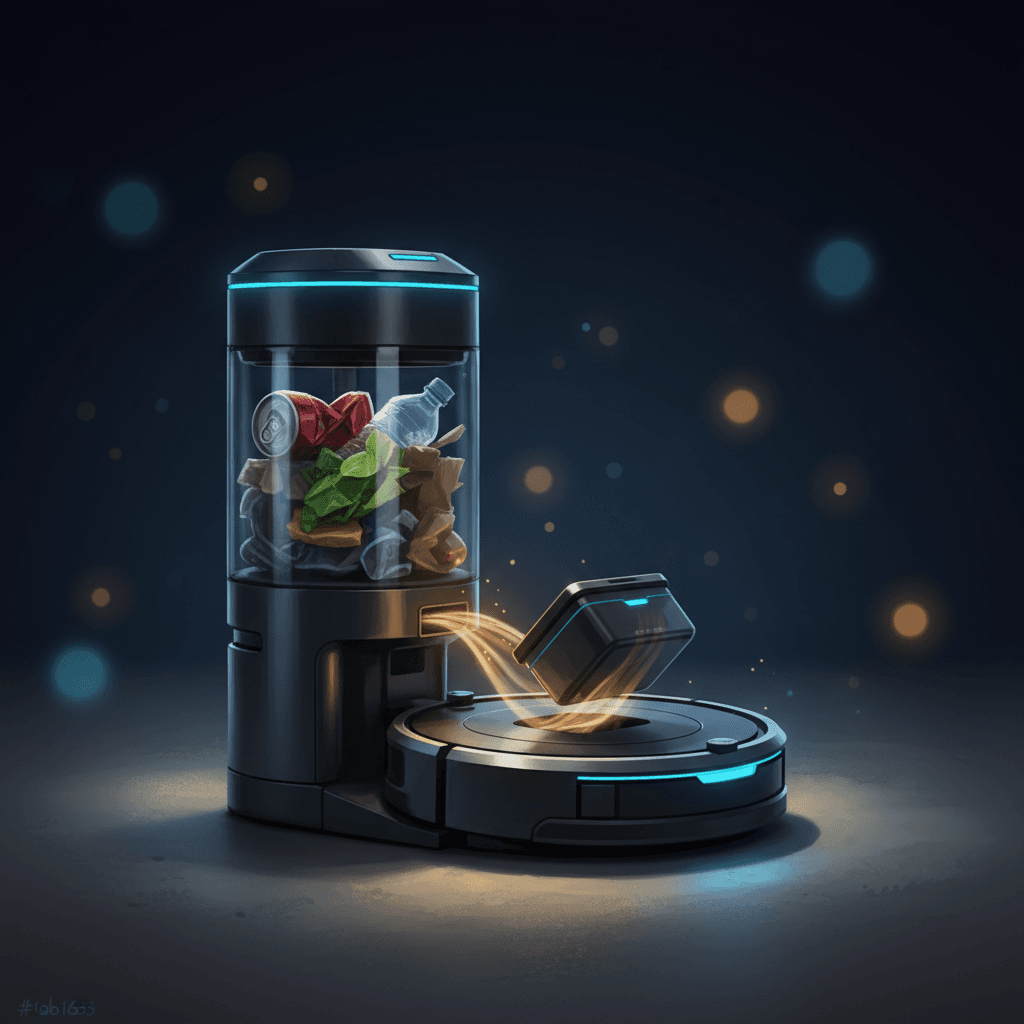
This price drop has made the desire to "let the robot vacuum even handle emptying the dustbin" suddenly much more realistic. A self-emptying station (dust station) works by automatically suctioning debris from the vacuum into a bag or bin each time the unit returns to its charging dock. Once set up, you can go weeks or even months without ever touching the vacuum's collected dirt. For busy dual-income households or singles looking to reduce daily chores, this is a game-changer.
How to Read Specifications: Key Points from Official Information
To understand a vacuum cleaner with an automatic dust collection station, you first need to grasp the key specification terms correctly. None of them are difficult concepts. Let's explain each one simply.
Suction Power (Pa) This indicates the vacuum's "sucking force" in pascals (Pa). Generally, the higher the number, the more powerfully it lifts dirt from deep in carpets or gaps in flooring. However, a higher number isn't always better—compatibility with floor types and balance with operating noise are important. For mid-range models in 2026, around 4000Pa serves as a rough benchmark.
Dust Bag Capacity This refers to the capacity of the paper bag installed inside the automatic dust collection station. Anker's Eufy Clean X8 Pro has about 2.5L, and TP-Link's Tapo RV10 Plus has a similar size (per official manuals). The larger the capacity, the less frequently you need to replace it. For a single person, around 3L lasts about 1–2 months, while for households with pets, it fills up a bit faster—a practical guideline.
Mopping Function (Mop) In addition to simple dust suction, more models now offer wet mopping for floors. They incorporate wet sheets or tanks to wipe away fine dirt and skin oil films that suction alone can't remove. Note that this is basically "water-only mopping without detergent" and does not guarantee waxing or disinfection effects.
Mapping Technology (LiDAR / Optical Sensors) LiDAR (Light Detection and Ranging) uses laser light to precisely create a 3D map of a room's layout. This allows efficient navigation while avoiding obstacles. iRobot's Roomba series has long used the "vSLAM" method, which relies on optical cameras and image analysis. Both approaches offer high mapping accuracy, but whether the unit can fit under furniture depends on its height.
Operating Noise (dB) According to the official specs for Sharp's stick-type automatic dust collection vacuum "EC-XR1," operating noise during stick use is about 52–55 dB, and during automatic dust collection at the station, about 60 dB. Generally, robot vacuum operating noise falls within 50–65 dB, which you can think of as somewhere between a library and normal conversation—a safe ballpark.
Selection Criteria: 5 Key Factors to Consider
1. Where to Set Your Budget Even basic models in the ¥50,000 range (e.g., iRobot Roomba i5+ or TP-Link Tapo RV10 Plus) deliver solid auto-empty functionality. At ¥70,000 to ¥80,000, you gain mopping capabilities and advanced room-specific controls via app (such as the Eufy Clean X8 Pro). Above ¥100,000, you get a fully automated "complete station" that handles mop washing, drying, and water refilling (as covered in the ALPEX article).
2. Robot Vacuum vs. Stick Vacuum Robot vacuums handle daytime automated cleaning on their own. Stick vacuums (like the Sharp EC-XR1) suit those who prefer manually targeting specific areas. Auto-empty on stick models works by simply docking the unit back into its charging cradle, which then sucks out the debris. Your choice depends on room layout and cleaning habits.
3. Do You Need Mopping? If your home is primarily hardwood floors, a mopping-capable model is well worth it. However, you'll still need to refill the water tank and regularly wash the mop pads. In homes with mostly carpet, you can skip mopping and allocate your budget toward suction power or noise reduction instead.
4. Installation Space and Design Auto-empty stations are typically tall, combining the charging dock and debris collection mechanism into one unit. For example, the Sharp EC-XR1 station measures 200mm wide × 289mm deep × 435mm high (official specs). Robot vacuum stations generally require about 40cm in height and 30cm in depth. Measuring your intended placement spot before purchase is essential.
5. Noise Levels and Daily Schedule If you run the vacuum while out during the day, noise isn't a major concern. But if you plan to use it after returning home, at night, or while working from home, opt for models with operating noise at or below 55dB or those with an "Eco Mode." The station's auto-empty sound (around 60dB) lasts only a few dozen seconds, so it's unlikely to cause significant stress—though it's wise to check if you can schedule it to avoid late-night operation.
Comparison by Type
Vacuum cleaners with automatic dust collection stations can be broadly divided into four types based on features and price range. These are summarized in the table below. All are generic categories searchable on platforms like Rakuten Market.
| Type | Key Features | Approximate Price Range | Best Suited For |
|---|---|---|---|
| Basic Auto-Empty Robot Vacuum | Focused on automatic dust collection. No mopping. Mapping features range from standard to advanced. | 50,000–70,000 JPY | Those who want to save money while eliminating the hassle of emptying the dustbin. Homes without pets. |
| Auto-Empty Robot Vacuum with Mopping | Supports dust collection + mopping. Some models allow you to designate mopping areas via app. | 70,000–90,000 JPY | Those bothered by sticky floors. Those who want to remove light kitchen grime daily. |
| Premium All-in-One Station Robot Vacuum | The station automatically handles mopping, washing, drying, and water refilling. Dust collection is also fully automated. | 100,000–150,000 JPY+ | Those who want to minimize maintenance. Those with large homes who want full automation including mopping. |
| Stick Vacuum with Auto-Empty Station | A manual stick vacuum. Automatically empties dust when returned to the charging station. | 40,000–60,000 JPY (unit + station) | Those who want to clean specific spots on their own schedule. Those in small rooms where a robot vacuum has difficulty navigating. |
How to Use & Tips: Steps and Precautions for First-Time Users to Avoid Mistakes
Prioritize Securing the Installation Space Many auto-empty stations need to be placed flush against a wall. For robot vacuums, ensure at least 50cm of clearance on both sides of the station and 1.5m in front; otherwise, the unit may fail to return and stop mid-operation (per the Tapo RV10 Plus manual). Adjust your furniture layout beforehand.
Run a Mapping Cycle First Robot vacuums that rely on app integration require an initial "mapping run" to memorize the entire room as a floor plan. Clear any cables or lightweight mats from the floor, and ensure the battery is sufficiently charged before starting. This significantly improves cleaning efficiency afterward.
Don't Miss the Dust Bag Replacement Alert The app or unit indicator light will notify you when the bag is full. However, with paper bag types, overpacking can reduce suction power and cause odors. While compatible third-party bags exist for models like the Eufy Clean X8 Pro and Roomba series, using genuine bags reduces the risk of station malfunctions. As a general guideline (based on trends from multiple ALPEX articles), replace the bag every 1–2 months for single-person households, or every 3–4 weeks for families or homes with pets.
Remove the Wet Mopping Pad After Use Even with wet-mopping compatible models, leaving the mop pad attached to the station can damage the floor or the pad itself due to moisture. Unless you have a fully automatic station, get into the habit of removing and drying the pad after cleaning to extend its lifespan.
Additional Notes for Foreign Readers Living in Japan
- Language Support: Apps from Anker and iRobot generally support multiple languages, including Japanese and English. Since they reference your device's language settings during setup, you can operate them smoothly in English.
- Warranty and Support: Purchasing from an official Japanese distributor includes a manufacturer's warranty (typically 1 year). Parallel imports may be cheaper, but note that repair services may not be available in Japan in case of malfunction.
- Shipping: Rakuten Market and Amazon Japan handle delivery for large home appliances. Date/time specifications and installation services vary by seller, so confirm these details when ordering.
Example Use Cases (Scenarios)
Example 1: Single Office Worker A A lives alone in a 1LDK rental in the city center and often returns home late on weeknights. With no time to clean, hair and dust tend to accumulate on the floor. They purchase a basic self-emptying robot vacuum and set it to automatically clean at 10:00 AM every day. On weekends, they simply check whether the dust bag in the station is full, and the room stays clean. The initial budget was around ¥60,000. Since they never have to touch the dust, their stress is reduced even with a busy schedule. (Scenario)
Example 2: Household with Preschool Children B B's home has mainly hardwood floors, and every time their child spills food or drink, they wipe it up with a tightly wrung cloth. They purchase a mopping-capable self-emptying robot vacuum (budget around ¥80,000). After setting a schedule via the app to mop only the dining area after meals, the stickiness on the floor decreases, and they are freed from daily cloth wiping. Although they still need to wash the mop pad once a week, the overall burden is significantly lighter than before. (Scenario)
Example 3: Foreign Resident in Japan C C has been living in Japan for two years and is still not used to operating Japanese home appliances. They choose a self-emptying robot vacuum (iRobot Roomba series) that supports an English-language app. Instead of using an overseas-shipping store on Rakuten, they purchase it from a Japanese electronics retailer's online shop and receive it at their apartment's delivery box. Since it's an official product with a valid warranty in Japan, they can easily contact English-language support in case of any issues, giving them peace of mind. (Scenario)
Frequently Asked Questions
Q1: Does the auto-empty dustbin fill up quickly? For single-person households, reports indicate it takes about 1–2 months to fill, while families or homes with pets typically need a replacement every 3–4 weeks. This is a general trend when using a 3L dust bag, and actual frequency varies depending on flooring type, cleaning frequency, and season (e.g., shedding season).
Q2: Can it be used in a small rental apartment? It is possible, but the key is whether you can allocate space for the station and ensure enough room for the robot vacuum to move. Even in a 1K or studio apartment, it can work depending on furniture layout. Stick-type auto-empty vacuums (e.g., Sharp EC-XR1) are better suited for small spaces because the station has a relatively small footprint and you don’t need to worry about the robot’s travel path.
Q3: Can it pick up pet hair? Yes, it can. However, whether the brush design prevents tangling varies by product. In recent years, more models (e.g., some iRobot Roomba series) use rubber brushes that are less prone to pet hair tangling. For homes with pets, keep in mind that dust bag replacement frequency will be higher, so factor that into your choice.
Q4: Does the all-in-one station’s mopping really clean well without detergent? Mopping is primarily designed to wipe away skin oils and light dust that dry cleaning can’t remove, but it does not guarantee complete removal of grease or heavy food stains. Using only water without detergent is effective enough as a substitute for daily quick wiping. For stubborn stains, separate manual cleaning is required.
Summary
In 2026, robot vacuums with automatic dust collection stations have finally dropped to a price range where they can be seamlessly integrated into daily life. They lower the psychological barrier of emptying the dustbin and have the power to fundamentally change the way housework is done.
- Budget-conscious users who want reliable convenience should choose a basic automatic dust collection robot vacuum (priced between ¥50,000–¥70,000) to enjoy the greatest benefit: freedom from emptying the dustbin.
- Dual-income households or families with children seeking comfortable hardwood floors will find that a water-mopping automatic dust collection robot vacuum (priced between ¥70,000–¥90,000) can replace daily light mopping.
- Residents of larger homes who want to minimize maintenance should consider a premium robot vacuum (¥100,000 and up) that fully automates water refilling and mop washing.
- Those who want to save their own effort rather than rely on a robot, or who have limited installation space will be better suited by a stick vacuum with automatic dust collection (priced between ¥40,000–¥60,000).
When making a purchase, search for terms like "automatic dust collection robot vacuum" or "automatic dust collection stick vacuum" on Rakuten Ichiba or the manufacturer's official store to check the latest prices and stock availability.
Popular Product Examples (Actual Rakuten Market Data)
As of July 23, 2026, the editorial team selected these from Rakuten Market search results for "vacuum cleaner with automatic dust collection station" based on review track records. Prices and ratings are as of the time of data collection and are subject to change.

| Product | Reference Price | User Rating (Japan) |
|---|---|---|
| Popular Product ★New★ Roomba i5+ Robot Vacuum iRobot Automatic Dust Collection Dust Bin Wi | Approx. ¥59,800 | ★4.80 (5 reviews) |
| Robot Vacuum Storage Box Compatible with Automatic Dust Collection Models Dust Bin Compatible Roomba Base Router | Approx. ¥11,800 | ★3.00 (1 review) |
| Robot Vacuum Storage Box Compatible with Automatic Dust Collection Models Dust Bin Compatible Roomba Base Router | Approx. ¥11,800 | ★5.00 (1 review) |
| ★New Sealed★ Roomba Combo i5+ Robot Vacuum iRobot Automatic Dust Collection Dust Bin | Approx. ¥62,800 | Reviews being collected |
▶ See more "vacuum cleaner with automatic dust collection station" on Rakuten Market ・ Search on Yahoo! Shopping
Where to Get the Best Deal?
- Check prices and stock for "Vacuum Cleaner with Auto-Empty Station" on Rakuten Market (with points rewards)
- Search for "Vacuum Cleaner with Auto-Empty Station" on Yahoo! Shopping (eligible for PayPay points)
Prices, stock, and point reward rates are subject to constant change. Please check the latest conditions at the link before purchasing.
Related articles
EARTHCAR Car Sharing Review 2026: Free Monthly Fee? Compare Costs & User Feedback
Updated for 2026. EARTHCAR is a car-sharing service with no monthly fee and free for the first 10 km. This review covers user feedback, pricing, and a comparison with Times Car Share. Ideal for short trips with a wide vehicle selection. Also includes discount info with conditions.
2026 Latest! How to Buy Stylish Furniture at a Bargain with Modern Deco [Reviews, Ratings, Comparison]
In 2026, we thoroughly investigate Modern Deco's reviews and ratings. We explain how to buy at a bargain, including comparisons with Nitori and Yogibo, a 30-day return guarantee, and free shipping. Full of tips to create your ideal room on a budget of 150,000 yen.
TikTok Shop Reviews & Safety 2026: Is It Legit? Smart Shopping Tips
In 2026, we dive deep into TikTok Shop reviews and reputation. Learn about safety, money-saving shopping strategies, and real pros and cons. A comprehensive guide for first-time users to shop with confidence.