
Verification Status: This article is based on publicly available information (no hands-on testing or live trading by the editorial team).
As the end of the month approaches, Sato (pseudonym) feels a growing weight in their chest. Client payments are still pending, while deadlines for outsourcing costs and server fees loom relentlessly. Sato is a sole proprietor in their 40s running a web production company in Tokyo. Their clients are mostly mid-sized firms, with payment terms of 60 days. From project delivery to actual payment, there's a gap of roughly two months.
Conclusion: Urikakedo (crowdfunding platform) is well-suited for business owners who want to sell their accounts receivable to access funds early. Since fees are quoted on a case-by-case basis, it's worth getting a free quote and application to see what terms apply to your business.
The Reality of Cash Flow Strain While Waiting for Receivables
Long receivable collection periods have a major impact on the cash flow of sole proprietors and small businesses. In Sato's case, even after delivering a website project, payment doesn't arrive until roughly two months later. Meanwhile, subcontractor fees, server management costs, and personal living expenses keep piling up in the meantime. Facing the month-end invoices with insufficient cash on hand is a heavier burden than most people imagine.
This kind of cash flow challenge is by no means unusual. Many small business owners are forced to accept long payment terms due to the power imbalance with their clients. Bank business loans take time to approve, and securing an adequate credit line isn't always possible. Sato had approached his bank in the past, but given his revenue size and lack of collateral, he felt that additional financing would be difficult to obtain.
"We have receivables on the books, but no cash available right now." This is precisely why factoring has gained attention as an option. By selling accounts receivable to a third party, you can access funds without waiting for payment. Sato heard from a fellow freelancer about "crowdfunding-style factoring that lets you sell your receivables and get cash quickly," which is how he learned about Urikake-do. He's still skeptical for now, but it seems worth looking into.
What is Urikakedo (Crowdfunding Factoring)? A Mechanism to Monetize by Selling Accounts Receivable
Urikakedo (crowdfunding factoring) is a cloud-based factoring service that allows businesses to monetize their accounts receivable by selling them. Factoring, in simple terms, is the "buying and selling of unpaid invoices." Unlike borrowing from a bank, you don't take on a repayment obligation—instead, you transfer the accounts receivable itself to obtain funds.
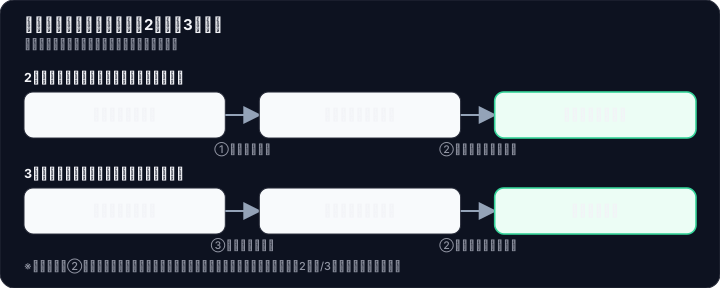

The difference from borrowing is clear. When you borrow money, repayment and interest are incurred. Factoring, on the other hand, involves selling accounts receivable, and the responsibility for collecting the sold receivables shifts to the buyer. As a result, the creditworthiness of the debtor (your client) tends to carry more weight than your own company's credit profile. For business owners like Sato, who deal with stable mid-sized companies as clients, this difference in the screening criteria is a point that cannot be overlooked.
The defining feature of the cloud-based model is that much of the process can be completed online. While traditional face-to-face factoring often required in-person meetings with sales representatives and paper documentation, the cloud-based approach aims to complete everything—from application to quotation to contract—entirely on the web. For busy business owners juggling daily operations, not having to visit a physical store or office is a major advantage.
That said, the types of receivables supported and the conditions vary depending on the case. For specific requirements, checking the latest coverage on the official Urikakedo website is the most reliable approach. At minimum, holding accounts receivable is a prerequisite for using the service. Sato decided to first check whether his own accounts receivable would qualify by requesting a free quote.
How Is It Different from Bank Loans and Business Loans? Where Crowdfunding Factoring Stands
There are many ways to raise funds. What Sato-san wanted to know most was, "How exactly is this different from a bank loan?" Here, we compare and organize crowdfunding factoring services like Urikake-do, bank loans, face-to-face factoring, and other online factoring services.
| Comparison Item | Urikake-do (Crowdfunding Factoring) | Bank Loan (Business Loan) | Face-to-Face Factoring | Other Online Factoring |
|---|---|---|---|---|
| Fees (purchase fee rate) | Individual quote | Interest, guarantee fees, etc. | Individual quote | Individual quote |
| Speed to funding | Designed for fast access to capital | Tends to take longer due to screening | Varies depending on screening | Varies by company |
| Minimal documentation required | Online-focused | More extensive (financial statements, etc.) | Somewhat more extensive | Online-focused |
| Fully online completion | Online-focused | Primarily in-branch with a dedicated representative | Primarily face-to-face | Online-focused |
| Screening flexibility | Tends to emphasize the creditworthiness of the account debtor | Emphasizes your own company's financial standing | Tends to emphasize the account debtor's creditworthiness | Varies by company |
| Best suited for | Business owners with accounts receivable who need fast access to capital | Business owners with a stable financial base who can borrow at low cost | Business owners who want face-to-face support | Business owners who want to complete everything online |
What this table shows is that each funding method places emphasis on different factors. Bank loans generally offer the potential for lower interest rates, but screening takes time and your financial standing is scrutinized. Face-to-face factoring offers more hands-on support, but the process is more cumbersome.
Crowdfunding factoring can be positioned as an option that sits in between. If you have accounts receivable, screening tends to be based not only on your own company's financial situation but also on the creditworthiness of the account debtor, which means decisions may be more flexible compared to bank loans. Of course, fees are quoted individually and vary depending on the nature of the receivables. Sato-san began to feel that "if the account debtor is stable, this could be a way to access capital through a different angle than a bank." With a free quote, you can check the terms before actually signing a contract. That alone makes it worth trying at least once.
Understanding Fees: What a Free Quote Reveals and What You Should Know in Advance
Factoring fees are determined individually based on the content of the receivables and the client involved. Generally, factors consider the creditworthiness of the debtor, the invoice amount, and the time until the payment due date. The stronger the debtor's credit profile—such as a large corporation with solid payment capacity—the lower the fee tends to be. Conversely, longer payment terms or weaker debtor creditworthiness can result in higher fees.
This is why no flat, one-size-fits-all fee can be quoted in advance. Even for the same business, the terms vary depending on which receivables are being sold. That's precisely why requesting a free quote or application to confirm your own terms is so important. While the official website outlines the general conditions, the actual quoted fee is provided on a case-by-case basis.
The value of a free quote lies in being able to see, at no cost, what terms your receivables can be purchased under. Requesting a quote does not obligate you to sign a contract. After reviewing the proposed fee and expected payout timeline, you can simply walk away if the terms aren't acceptable. This "low-cost, reversible first step" makes the free quote a significant source of reassurance for business owners struggling with cash flow.
Fees are deducted directly from the receivables. The amount you actually receive is the face value of the invoice minus the fee. It's therefore essential to properly recognize the fee as a cost. Taking a calm, comparative approach to the terms offered in free quotes is what leads to a decision you won't regret.
Sato was worried about how much the fees would amount to. However, learning that a free quote would let her confirm the terms before actually signing a contract put her mind at ease. The fact that she could inquire online without waiting weeks like she would for a bank loan is also a relief for busy business owners.
Usage Flow: A Step-by-Step Guide from Application to Funding
Crowdfunding is designed so that the entire usage process can be completed online. Below, we explain the typical flow step by step. While the specific procedures at Urikake-do may vary depending on the case, the overall process is as follows.
Step 1: Submit a Free Quote and Application Online First, enter the required information on the official website and request a free quote. You will register basic details such as your company name and an overview of the accounts receivable. There is no cost at this stage, and it serves as a way to gather information and check your company's eligibility.
Step 2: Enter Accounts Receivable Information and Submit Documents You will submit the documents needed to verify the receivables, such as details about the debtor and invoices. With the cloud-based model, these steps can be completed online. The volume and format of documents may vary by case, but the process is generally more streamlined than the in-person model.
Step 3: Screening and Purchase Terms Offered Based on the information submitted, a screening is conducted, and you will be notified of the purchase decision, fees, and expected funding timeline. At this stage, you review the terms, and if they are acceptable, you proceed to the contract. If you are not satisfied with the terms offered, you can decline without entering into a contract.
Step 4: Contract and Funding Once the contract is finalized, the proceeds from the sale of the accounts receivable are deposited into your designated account. The time to funding varies by case and service, but for business owners who need to monetize quickly, having this entire process completed online is a major advantage.
Sato checked this flow on the official website and felt that "it might be simpler than I expected." In particular, the fact that the initial free quote and application can be completed online is highly appealing to sole proprietors who cannot afford to spend time at a bank branch. Since fees and funding timelines can only be known through an actual quote, taking that first step is what matters.
3 Concerns to Know Before Applying — and How to Resolve Them
When considering crowdfunding, many business owners share common concerns. These include the burden of fees, notifying business partners, and the likelihood of passing the screening process. Here, we'll honestly address these concerns and show how to resolve them.

Concern 1: Aren't the fees too high? Factoring fees can sometimes feel high compared to bank loan interest rates. This is because the buyer assumes the risk of collecting the accounts receivable. However, fees are quoted on a case-by-case basis and can be confirmed in advance through a free estimate. The transparent side of factoring is that you can weigh the benefits of accessing cash against the costs based on the terms offered.
Concern 2: I don't want my business partners to know Many people worry about whether the factoring company will notify their accounts receivable clients. Whether notification is required depends on the service and contract type, so it's best to confirm before applying. Urikakedo's official website may also provide information on how they handle communication with business partners, so be sure to check the official website for the latest guidance.
Concern 3: I'm worried about passing the screening Factoring screening tends to place more weight on the creditworthiness of the accounts receivable client rather than your own company's financial standing. In other words, if your client is a stable company, there's a chance your receivables will be purchased even if your own business performance fluctuates. Of course, not every case is approved, but it's worth knowing that the screening criteria differ from those of bank loans.
Sato-san had these same concerns. However, once he realized that "with a free estimate, you can review the terms and risks before signing a contract," he was able to consider the option more positively. Concerns can be resolved with information. Organizing what you can verify in advance leads to sound decision-making.
Crowdfunding Factoring Caveats: Understanding the Characteristics of Financing That Differs from Borrowing
Factoring is not borrowing. If you fail to properly understand this difference, unexpected misunderstandings can arise. The table below summarizes the differences between borrowing and the sale of accounts receivable (factoring).
| Item | Bank Borrowing (Financing) | Factoring (Sale of Accounts Receivable) |
|---|---|---|
| Nature of the funds | Debt (repayment obligation applies) | Sale proceeds (no repayment obligation) |
| Repayment | Principal and interest must be repaid | No repayment required |
| Cost | Interest, guarantee fees, etc. | Purchase fee |
| Main focus of screening | Your company's creditworthiness and financial standing | Creditworthiness of the account debtor |
| Use of funds | Relatively unrestricted | Limited to the scope of the accounts receivable |
As this table shows, factoring does not create a repayment obligation; however, since fees are deducted from the receivables, the actual amount you receive is less than the face value. In other words, it is important to recognize the fee as a cost and compare it against the opportunity benefits of monetizing the receivables and the effect of avoiding payment delays.
Additionally, since factoring is not a loan, it is a transaction not subject to the Money Lending Act. Unlike illegal salary factoring or loan-like schemes, services that handle business accounts receivable must be used with a proper understanding of their nature. Always review the terms before signing a contract, and make your decision only after fully understanding the quoted fees and expected funding timelines.
Mr. Sato was attracted to the fact that factoring is "not debt," but he remained level-headed, thinking, "Since fees are involved, I'll confirm the costs through a free quote before deciding." Understanding the characteristics correctly, as one financing option among many, leads to appropriate use.
Who Is It Suitable For? Characteristics of Those It May Not Suit
By now, readers like Sato — business owners who have accounts receivable but are short on cash on hand — will see that Urikake-do (crowd factoring) can be a strong option. That said, it is not right for everyone. Let's clarify who it suits and who it doesn't.
Who Urikake-do (crowd factoring) suits
- Business owners with long receivable payment terms who need funds before payment arrives
- Business owners who find bank loan screening slow, or who struggle to pass bank loan approval
- Sole proprietors and SMEs who want to complete the entire process online and have no time to visit branches or counters in person
- Business owners whose debtors are stable companies and who hold receivables
Who Urikake-do (crowd factoring) does not suit
- Business owners who do not hold any receivables
- Business owners who cannot accept the fees, or who judge that the cost of monetization outweighs the benefit
- Business owners who absolutely cannot avoid notifying their business partners
Urikake-do is best suited to business owners who hold receivables and prioritize speed over bank loans. The first reason is that screening tends to focus primarily on the creditworthiness of the debtor, which may differ from bank loans that are hard to obtain based on your own financials alone. The second is that the online-first process lets even busy business owners get started easily, from a free quote onward.
For business owners like Sato, who carry receivables with 60-day payment terms and are pressed by month-end payments, it is well worth considering. Start with a free quote or application to see under what terms your receivables can be purchased. It costs nothing and can be used freely as a pre-contract information-gathering step.
Summary: Start by Checking Your Company's Terms with a Free Quote or Application
Looking back, Sato's problem boils down to one point: "There are accounts receivable, but no cash available right now." For this issue, Urikake-do (crowdfunding-style factoring) offers a way to raise funds early by selling accounts receivable. Unlike bank loans, there is no repayment obligation, and the process can be completed online.
Fees are quoted on a case-by-case basis, so you won't know your company's terms until you actually apply for a free quote. However, this also means you can confirm whether your receivables will be purchased, the fees involved, and the expected deposit timeline before signing any contract. Since the free quote costs nothing and can be easily submitted online, it's a suitable first step when considering financing options.
Here's a summary of the key points from this article:
- Factoring is not a loan; it's a mechanism to obtain funds by selling accounts receivable
- Urikake-do is a cloud-based service, characterized by its online-first process
- Approval tends to weigh the creditworthiness of the party owing the receivable, which is a different evaluation criterion from bank loans
- Since fees are quoted individually, you can check your company's terms through a free quote or application
When you're unsure about financing options, the first step should always be "gathering information." With a free quote or application, you can check how your company's accounts receivable would be handled without worrying about out-of-pocket costs. Based on those results, you can calmly decide whether to move forward. Sato is also taking that first step. As an initial check to turn accounts receivable into cash, a free quote is a perfectly reasonable option.
Methodology and Disclosure
Verification Method: This article is based on publicly available information confirmed as of 2026-08-20. The editorial team has not actually contracted or used the services reviewed. The content is an explanation based on public information (official pages, third-party reviews, and user feedback). Since service details, fees, and promotions are subject to change, please always check the official information before signing up.
Operator Information: The editorial policy and evaluation criteria for this article are described in the Editorial Policy, and the verification procedures are outlined in the Evaluation Methodology. If you find any errors in the content, please report them through our contact window.
Affiliate Disclosure: This article contains affiliate links, and our site may earn a commission at no additional cost to the reader. Compensation does not influence the evaluation content.
Frequently Asked Questions
How much are Urikakedo (Crowd Factoring) fees?
Fees are quoted individually based on the details of your accounts receivable and the creditworthiness of your clients. There is no flat rate; you need to check your specific conditions with a free quote. Generally, the higher the creditworthiness of your client (e.g., large corporations), the lower the fee (conditions apply).
How long does it take from application to funding?
Since it's a cloud-based service, the process is completed online and is designed for quick funding. The exact number of days depends on the nature of the receivables and the screening status, but it is expected to be faster than traditional factoring. You can confirm the exact timeline when you request a free quote or apply.
Can sole proprietors use this service?
Yes, sole proprietors can use it. The prerequisite is that you have accounts receivable, and the creditworthiness of your clients is heavily weighted in the screening. Sole proprietors with stable clients may be able to use it even if bank loans are difficult.
Can I use it without my clients knowing?
Factoring involves selling your accounts receivable, so notification to your clients may be required. However, some services offer methods to omit notification, such as 'receivables with transfer prohibition clauses' or 'implied consent'. Please check the official website for details.
Can I use it if I don't have accounts receivable?
Urikakedo is a service that sells accounts receivable to raise funds. Therefore, you cannot use it without accounts receivable. Having accounts receivable is a prerequisite for use.
I'm worried about passing the screening. What are the criteria?
The screening mainly focuses on the creditworthiness of your clients (the parties you invoice). Not only your own financial situation but also the stability of your clients is key. Specific criteria are not disclosed, but you can check in advance with a free quote.
How is this different from a bank loan?
A bank loan is borrowing money that must be repaid, while factoring is selling your accounts receivable, so there is no repayment obligation. Banks focus on your company's financials, whereas factoring tends to focus on the creditworthiness of your clients. The process is also more likely to be completed online.
Are there any costs for the free quote or application?
The free quote and application are free. You can check the terms under which your accounts receivable would be purchased without any cost. There is no obligation to contract after the quote; you can decline if you're not satisfied.
Related articles
IwaiCosmo Securities Review 2026: Honest Look at Fees and IPO Lottery Odds, Plus Zero-Fee NISA
Get the latest 2026 review of IwaiCosmo Securities. We take an honest look at their strong IPO underwriting track record, zero trading fees for NISA accounts, overall fee structure, and customer support. Compare with major online brokerages.
Fujitomi Securities FITS Review 2026: Fees, Features, and Why It's Ideal for Commodity Futures Beginners
A comprehensive review of Fujitomi Securities' online commodity futures trading platform, FITS. Discover industry-low fees (from ¥412 per side for standard contracts, conditions apply), beginner-friendly tools and support, and the loss cut system. Updated for 2026.
What is the reputation of moomoo Securities? Thorough comparison of fees, features, and reviews [2026 Latest]
Thorough explanation of moomoo Securities' reputation based on fees, features, and reviews. US stock fee 0.132% (with conditions), Japanese stock free, exchange fee 0 yen (with conditions), 24-hour trading, AI analysis tools, etc. Compare the latest information for 2026. Also note points such as not supporting Tsumitate NISA.