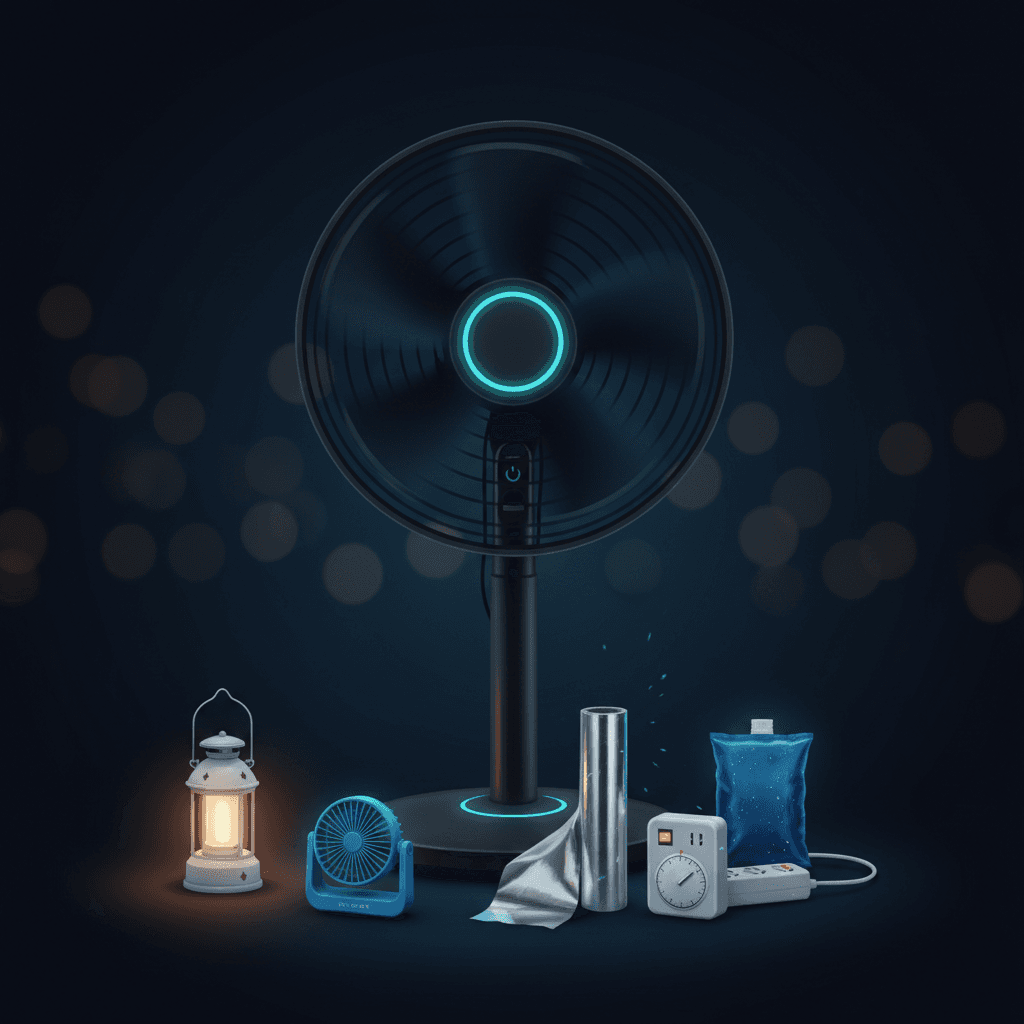
Conclusion For summer 2026, the most cost-effective energy-saving gadgets you can buy for under ¥10,000 fall into three categories: optimizing air conditioner usage, cutting standby power, and lowering perceived temperature. Below is a quick-reference table to help you choose the best gadget for your needs.
| User Profile | Top Priority Category | Budget Range | Why Choose This |
|---|---|---|---|
| Heavy AC user (spends a lot of time at home, worried about electricity bills) | Circulator fan | ¥4,000–¥9,000 | Circulates cool air, keeping the whole room cool without lowering the AC thermostat. |
| Wants to visualize waste (wants to know exactly where electricity is being used) | Power consumption meter | ¥2,000–¥4,000 | Quantifies AC power usage, helping to build energy-saving habits. |
| Wants easy automation (often forgets to turn off appliances, wants remote control) | Smart plug | ¥2,000–¥4,000 per unit | Cuts standby power via timer or remote control. Buying multiple units still fits the budget. |
| Wants to sleep comfortably (prioritizes relief from hot, sleepless nights) | Cooling bedding | ¥3,000–¥9,000 | Reduces the need to run the AC all night, while also improving sleep quality. |
What You Should Know Before "Cooling Down"
According to the 2025 Household Expenditure Survey (Ministry of Internal Affairs and Communications), the average monthly electricity bill for a two-person household in Japan is ¥12,144, amounting to approximately ¥146,000 annually. Furthermore, the renewable energy surcharge has been raised to ¥3.98 per kWh for fiscal year 2025, adding upward pressure on overall electricity costs. Feeling the need to "do something about the electricity bill" as summer approaches is a natural response, even from a purely numerical standpoint.
However, blindly stockpiling energy-saving gadgets can often backfire. Unless you first clarify "what kind of lifestyle you lead and where your frustrations lie," you'll only end up with more devices gathering dust, unused. Here, we categorize readers into three types based on their living situation and air conditioner usage.
- Air Conditioner Dependent Type (Singles, Dual-Income Households): Often turn on the AC immediately after returning home and keep it running until morning. Also concerned about standby power consumption when away.
- Home-Centered Type (Remote Workers, Households with Young Children): Use the AC from daytime onward, resulting in long operating hours. Struggle with uneven room temperatures.
- Bedroom-Focused Type (Heat-Sensitive Individuals, Elderly Family Members): Bedroom heat countermeasures are more urgent than in the living room. Tend to crank up the AC due to difficulty sleeping.
By applying these categories, you can narrow down the types of energy-saving gadgets you actually need.
Summer Energy-Saving Gadget Budget Breakdown
A budget of 10,000 yen or less places you in the so-called "entry to mid-range" category for energy-saving gadgets. Based on search data and current market prices, the typical budget range for each category is as follows:
- Smart Plug (1 unit): 2,000–4,000 yen. Wi-Fi connected models with energy monitoring features are concentrated in this price range.
- Power Consumption Meter: 2,000–4,000 yen. These plug-in devices display real-time wattage, cumulative energy usage, and estimated electricity costs.
- Air Circulator: 4,000–9,000 yen. DC motor silent models are at the higher end, while simple AC motor models can be found at the lower end.
- Cooling Bedding (Water-circulating mats / Contact-cooling pads): 3,000–9,000 yen. Fan-circulated water types are slightly more expensive, while gel pads and high-tech fiber mattress pads are closer to the lower end.
- Power Strip with Individual Switches: 1,500–3,000 yen. These allow you to physically cut standby power to each outlet.
With a 10,000 yen budget, you have two main options: buy one premium gadget from the list above, or combine several cheaper items to optimize energy savings throughout your home.
Recommended Categories by Type
| User Type | Recommended Category | Estimated Budget | Reason |
|---|---|---|---|
| Air Conditioner Dependent | Smart Plug + Power Strip with Switch | 4,000–7,000 yen total | Turning off the AC remotely from outside and cutting standby power reduces annual waste. Visualizing usage with a smart plug also boosts energy-saving awareness. |
| Home-Centered | Circulator Fan | 4,000–9,000 yen | Distributes cool air from the AC throughout the room, allowing you to stay comfortable even if you raise the set temperature by 1–2°C. Models with low-power DC motors are available for under 10,000 yen. |
| Bedroom-Focused | Cooling Bedding | 3,000–9,000 yen | Keeps the AC set temperature higher while drawing heat away from the body where it touches the surface. This directly reduces electricity costs and helps avoid health issues from overcooling. |
| All Types (Start by Understanding Current Usage) | Power Consumption Meter | 2,000–4,000 yen | Measures the AC's electricity usage by time slot, giving you concrete numbers on how much is used and when. This clarifies exactly where to focus your energy-saving efforts. |
The Psychology of Choosing Energy-Saving Gadgets: How to Avoid "Analysis Paralysis"
When gathering information on energy-saving gadgets, you might find yourself torn between "a smart plug sounds good, but a circulator fan also seems promising," ultimately ending up buying nothing as summer arrives. This tendency to postpone decision-making when faced with too many options is known as the "choice overload" or "decision avoidance" effect—a common experience not limited to shopping.
The quickest way out of this dead end is to revisit the scale of the "pain point" you're currently facing. For example, if "looking at your monthly electricity bill fills you with dread," then identifying the cause with a power consumption monitor should be your first step. If "your bedroom is too hot to sleep," trying cooling bedding first will boost your daily satisfaction faster. By deciding to pick just one item based on your strongest complaint, you'll be surprised how smoothly you can move to checkout.
There's also the perspective of balancing relationship distance with price. If it's an investment in yourself, allocating a budget of up to 10,000 yen to a single item rarely backfires. But if it's for shared family use, splitting the budget to cover a wider range—like "a smart plug plus a power-saving power strip"—tends to yield higher satisfaction. Simply being mindful of the use case and the breadth of beneficiaries can speed up your decision-making.
Common Mistakes and How to Avoid Them
Mistake 1: Using a Circulator Like a Fan and Pointing It at a Window A circulator is more effective when used to move cool air from near an air conditioner outlet toward the center of the room, rather than blowing air directly at people. Pointing it out a window will expel the cooled air you've worked to generate, wasting electricity.
Mistake 2: Plugging a Smart Plug into a Refrigerator or Medical Device Smart plugs offer convenient remote ON/OFF control, but they should not be used with devices that cannot tolerate an unexpected power cut. As a rule, limit their use to appliances that can be safely turned off, such as TVs, audio equipment, or ceiling lights with high standby power consumption.
Mistake 3: Expecting Too Much from Contact-Cooling Bedding Gel pads and cooling-fabric bedding are designed to provide a refreshing cool sensation only when you first get into bed. If you're looking for cooling power that lets you sleep through the night without air conditioning, it's more realistic to choose a product that consumes electricity, such as a water-circulating mattress pad.
Examples of Gift Ideas (Scenarios)
Example 1: For a coworker — Someone who mentioned their utility bills went up due to remote work
A coworker who complained, "I've been working from home more lately, so my electricity bill is through the roof," would appreciate a set of a power consumption checker and a smart plug. Simply plugging it into an appliance reveals the "ignored" standby power consumption in numbers, helping them hunt down waste. The budget for both items is around 6,000 yen. Simple wrapping is sufficient, but given Japanese office culture, it's better to keep the gift from being too expensive to avoid awkwardness.
(Scenario)
Example 2: For a partner — Someone who wants to hold hands even on tropical nights
For a partner you live with or who frequently stays over, gifting cooling bedding can also improve your relationship. It reduces the "Go away, it's too hot" moments in summer, narrowing not just the temperature gap but also the emotional distance. A water-circulation type costs around 8,000–10,000 yen, and since it eliminates the need to lower the AC temperature, it also helps save on their electricity bill. If you request it as a "gift item" at an electronics store, they can provide simple wrapping.
(Scenario)
Example 3: For a foreign friend living in Japan — Someone confused by Japan's humid summer for the first time
For a foreign friend who finds the humidity much higher than in their home country and doesn't know how to use the AC effectively, a circulator fan is a great choice. It lets them experience how the AC's cool air reaches every corner of the room. When shipping, note that some Japanese homes have narrow hallways and doorways, so a compact model is safer. Some products only come with Japanese instruction manuals, so pairing it with a smart plug that works with an English-compatible app adds peace of mind.
(Scenario)
Frequently Asked Questions
Q. How much can I save per year with one smart plug?
A. According to one review article, combining standby power reduction with schedule management can save between 15,000 and 20,000 yen per year on electricity bills. However, this is only a rough estimate that depends on usage; actual results vary based on the power consumption and operating hours of the connected appliances.
Q. Should I buy a circulator or a fan?
A. If your main goal is to use it alongside an air conditioner, a circulator is the better choice, as it sends air in a straight line over longer distances. If you often want to feel the breeze directly on your skin, a fan with a wide oscillation range will provide greater satisfaction. It's best to decide based on your intended use case.
Q. Can I solve all my home energy-saving needs with 10,000 yen?
A. Solving everything at once is difficult, but a combination like "two smart plugs + one power strip with individual switches" can be kept to around 7,000–9,000 yen total, covering standby power for major appliances in the living room and bedroom, as well as air conditioner control. This allows you to address most issues without exceeding your budget.
Q. Can I use a smart plug purchased in Japan overseas?
A. Since plug shapes and voltages differ, these plugs are designed for use with Japan's Type A outlets and 100V environments. Using them abroad may require a plug adapter or voltage transformer.
Summary
If you're looking to start saving on summer electricity bills with a budget of under 10,000 yen, the quickest path is to first identify which type of "heat" and "electric bill" problem you're dealing with. For those who rely heavily on air conditioning, a smart plug with timer and remote control features offers immediate results by cutting waste. For people who spend most of their time at home, a circulator that boosts cooling efficiency provides excellent cost-effectiveness. If you're struggling with uncomfortable nights in the bedroom, choosing cooling bedding can reduce overuse of the air conditioner while also improving sleep quality. And for those who aren't fully aware of their current usage patterns, it's never too late to start by using a power consumption monitor to quantify the situation. This year's electricity savings begin with that one item that best matches your "top priority pain point."
Popular Product Examples (Actual Rakuten Market Data)
As of July 24, 2026, based on Rakuten Market search results for "energy-saving items 10,000 yen," the editorial team selected these products by review track record. Prices and ratings are as of the time of data collection and are subject to change.

- “Stock Sale ¥1,980~” Rechargeable Hand Warmer, Large Capacity, Electric Hand Warmer, Lightweight… — Approx. ¥1,980 · ★4.20 (5 reviews)
- Irregular Ise-Shima Binchotan Charcoal, Choose 3kg or 15kg, Charcoal, Sumi, Outdoor… — Approx. ¥7,000 · ★4.67 (3 reviews)
▶ See more “Energy-Saving Items 10,000 Yen” on Rakuten Market
Where to Get the Best Deal? How to Choose Between the 3 Stores
Even for the same product, the best store changes depending on the points you usually use and what you prioritize (speed, selection, rewards). Pick the store that suits you best.
- Search for "Energy-Saving Items ¥10,000" on Rakuten Market — Best for those saving up Rakuten Points or using a Rakuten Card, and for those who want to avoid mistakes by checking review counts. Points are boosted on days ending in 5 or 0 each month.
- Search for "Energy-Saving Items ¥10,000" on Yahoo! Shopping — Best for PayPay Points users and SoftBank/Y!mobile subscribers. PayPay rewards and LYP Premium benefits are more likely to be added.
- Search for "Energy-Saving Items ¥10,000" on Amazon — Best for those who want it as fast as possible, Prime members, or those who prioritize wide selection and stable stock. Many items also support international shipping.
*Prices, stock, and point reward rates are always subject to change. Please check the latest conditions at the link before purchasing.
Related articles
Stand Out with Frozen Food Gifts for 2026 Chugen: How to Choose by Recipient & Budget
A 2026 guide to making a difference with frozen food gifts for Chugen (mid-year gift giving). Structured by recipient type and budget, this guide explains how to choose based on consumer psychology principles, common mistakes to avoid, and example gift-giving scenarios. Also includes tips for finding deals on Rakuten and Yahoo! Shopping.
Vacuum Cleaners with Auto-Empty Station: Recommendations & How to Choose [2026] – Type Comparison
A comprehensive guide to vacuum cleaners with auto-empty stations, including how to read specifications, selection criteria, type comparisons, usage tips, and example scenarios. Also covers how to find deals on Rakuten and Yahoo! Shopping. 2026 edition.
EARTHCAR Car Sharing Review 2026: Free Monthly Fee? Compare Costs & User Feedback
Updated for 2026. EARTHCAR is a car-sharing service with no monthly fee and free for the first 10 km. This review covers user feedback, pricing, and a comparison with Times Car Share. Ideal for short trips with a wide vehicle selection. Also includes discount info with conditions.